Playing in the Dark: When Baseball's Night Games Were More Guesswork Than Sport
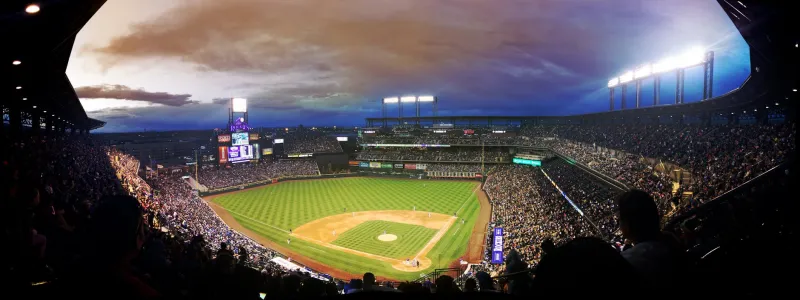
Picture this: It's 1935, and you're sitting in the bleachers at Crosley Field in Cincinnati, watching history unfold as the first official night game in Major League Baseball begins. The Reds are hosting the Phillies under a revolutionary new invention—artificial lighting. But what you're witnessing isn't the crisp, perfectly lit spectacle of today's games. It's more like watching baseball through a fog, where players are genuinely guessing where that fly ball might land.
When Darkness Was the Tenth Player
For the first seven decades of professional baseball, games started and ended with the sun. This wasn't just tradition—it was necessity. Without reliable artificial lighting, baseball was literally impossible after sunset. Players, fans, and even umpires depended entirely on natural light to follow the action.
The constraints were brutal. Games had to start early enough to finish before dark, which meant most working Americans couldn't attend weekday games. Rain delays were disasters that often meant cancellations rather than postponements. And forget about extra innings—once the sun started setting, everyone was racing against time.
But the real challenge came when teams started experimenting with artificial lighting in the 1930s. Those early flood lights weren't the sophisticated LED arrays we see today. They were crude, uneven, and created more shadows than illumination.
The Great Lighting Experiment
When Cincinnati's Crosley Field installed those first lights in 1935, they were using technology that would make today's stadium managers laugh. The system consisted of 632 individual bulbs mounted on eight towers, producing what seemed like a miracle of modern engineering but was actually about as bright as a well-lit parking lot.
Players had to completely relearn fundamental skills. Fly balls would disappear into dark spots between light towers, only to reappear—if you were lucky—just before they landed. Catchers complained that they couldn't pick up the spin on breaking balls. Outfielders developed a new technique of frantically searching the sky, hoping to catch a glimpse of white leather against the black night.
Pitchers, meanwhile, discovered they had gained a terrifying new weapon. Batters couldn't track the ball as well in artificial light, making fastballs appear even faster and curveballs more deceptive. Some hurlers saw their strikeout numbers jump dramatically in night games, not because they'd improved, but because hitting had become exponentially harder.
The Fan Experience in the Shadows
For spectators, those early night games were exercises in faith. You heard the crack of the bat and then spent several seconds scanning the sky, hoping to spot the ball's trajectory. Foul balls were particularly dangerous—fans couldn't see them coming until they were practically overhead.
The atmosphere was electric, though. Night games felt like special events, almost like attending a circus. The novelty of watching baseball under artificial lights drew massive crowds, even though the quality of play often suffered. Fans would arrive early just to watch batting practice under the lights, marveling at this technological wonder.
Radio announcers faced their own challenges. They couldn't rely on visual cues to describe the action, since they often couldn't see the ball any better than the players. Many broadcasts from this era feature long, awkward pauses where announcers are clearly trying to figure out what just happened.
The Evolution of Illumination
The transformation didn't happen overnight. Through the 1940s and 1950s, teams gradually added more lights and improved their positioning. Each upgrade brought new challenges—glare became a problem as lights got brighter, and the uneven lighting created optical illusions that players had to learn to navigate.
By the 1960s, lighting technology had improved dramatically, but it still couldn't match natural sunlight. Players consistently performed worse in night games, with batting averages dropping and error rates climbing. The difference was so pronounced that some teams strategically scheduled their best pitchers for night games, knowing they'd have a built-in advantage.
From Handicap to High-Tech
Today's stadium lighting is a marvel of engineering that those 1930s pioneers couldn't have imagined. Modern LED systems provide lighting that's actually more consistent than natural sunlight, eliminating shadows and dead spots entirely. Players can track fly balls as easily at midnight as they can at noon.
The contrast is staggering. What once required genuine courage—standing in the batter's box while a 90-mph fastball emerged from relative darkness—is now as routine as any daytime at-bat. Outfielders who once played entire innings basically blind can now make spectacular catches under lights that turn night into day.
Watching archival footage from those early night games is like viewing a completely different sport. Players moving tentatively, clearly struggling with visibility. Fans squinting into the darkness, trying to follow the action. Umpires making calls based more on sound than sight.
The Invisible Revolution
We take it for granted now, but the evolution of stadium lighting represents one of sports' most fundamental transformations. It changed when games could be played, who could attend them, and how the sport itself was performed. Night games went from dangerous experiments to the backbone of professional baseball's schedule.
The next time you're watching a perfectly lit night game, consider what you're really seeing: the culmination of nearly a century of technological evolution that transformed baseball from a daylight-dependent pastime into a 24-hour entertainment spectacle. Those players aren't just competing against each other—they're benefiting from decades of innovation that made the impossible routine.
In many ways, modern baseball exists because we learned to turn night into day. Were we ever really watching the same game when players had to squint at the sky just to do their jobs?