When NBA Teams Cost Less Than a House: The Shockingly Cheap Birth of Basketball's Billion-Dollar Empire
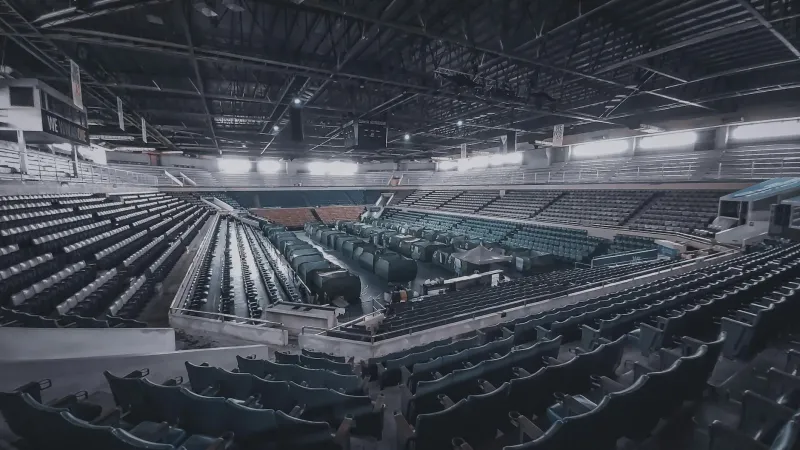
Picture this: it's 1961, and you've got $30,000 burning a hole in your pocket. You could buy a nice four-bedroom house in the suburbs, complete with a white picket fence and a two-car garage. Or, if you were feeling particularly adventurous (and maybe a little foolish), you could purchase an entire NBA franchise.
That's exactly what happened when the Chicago Packers joined the league that year. The entry fee? A modest $30,000 — roughly $300,000 in today's money. Fast forward to 2023, and NBA franchises routinely sell for over $4 billion. The Phoenix Suns just changed hands for $4 billion, while the Golden State Warriors are valued at nearly $8 billion. We're talking about an investment return that makes even the most aggressive stock portfolios look like savings accounts.
When Basketball Was a Side Hustle
Back in the early 1960s, owning an NBA team wasn't the prestigious, money-printing venture it is today. Most owners treated their franchises like expensive hobbies rather than serious business investments. The Boston Celtics, despite winning championships, played in a cramped, outdated arena that seated fewer than 14,000 fans. The Philadelphia Warriors drew so poorly that owner Eddie Gottlieb sometimes personally sold tickets outside the venue before games.
Team payrolls were laughably small by today's standards. The entire Boston Celtics roster in 1961 — including future Hall of Famers Bill Russell and Bob Cousy — earned a combined $200,000. That's less than what today's minimum-salary NBA players make in a single season. Most players worked summer jobs to make ends meet, and even superstars like Wilt Chamberlain had to negotiate hard for six-figure contracts.
The Great Gamble That Paid Off
What transformed basketball from a regional curiosity into a global phenomenon? Television changed everything, but not immediately. The NBA's first national TV contract in 1962 was worth just $100,000 annually — split among all teams. Compare that to today's media deals worth over $24 billion across nine years, and you start to understand the magnitude of change.
The league's early owners were essentially betting on America's growing appetite for entertainment and the eventual expansion of television coverage. Most had no idea they were sitting on potential goldmines. When Red Auerbach convinced Walter Brown to keep the struggling Celtics afloat in the 1950s, neither man could have imagined the franchise would one day be worth $4 billion.
From Local Curiosity to Global Brand
The contrast between then and now extends far beyond simple dollar figures. In 1960, NBA games were local events, barely covered by newspapers outside their home cities. Teams traveled by train, stayed in modest hotels, and played in venues that doubled as circus arenas and ice rinks. The concept of luxury suites, corporate sponsorships, or international marketing didn't exist.
Today's NBA franchises are global entertainment brands. The Lakers' social media following exceeds the population of most countries. Teams employ hundreds of people across departments that didn't exist in 1960: analytics, sports science, digital marketing, international scouting. The Toronto Raptors have an entire office in Africa. The Warriors built a $1.4 billion arena that's as much tech showcase as sports venue.
The Numbers Don't Lie
Consider the Seattle SuperSonics, purchased in 1967 for $1.75 million. When the team relocated to Oklahoma City in 2008, it sold for $350 million — a 200-fold increase over four decades. But even that pales compared to recent valuations. The Charlotte Hornets, historically one of the league's less valuable franchises, sold for $275 million in 2010 and are now worth $2 billion.
These aren't just inflation adjustments — they represent a fundamental shift in how Americans consume sports entertainment. The average NBA team now generates over $200 million in annual revenue, more than entire leagues earned in the 1960s.
The Transformation Nobody Saw Coming
Perhaps the most striking change is what NBA ownership represents today. In 1960, team owners were often local businessmen with deep community ties but modest wealth. Today's NBA owners include tech billionaires, hedge fund managers, and international conglomerates. Steve Ballmer bought the Clippers for $2 billion in 2014 — more than the combined value of every NBA franchise in 1980.
The league that once struggled to fill 8,000-seat arenas now packs 20,000-seat venues nightly and streams games to millions worldwide. What started as a winter distraction for college basketball fans became America's most internationally popular sport, generating wealth that would have seemed impossible to those early investors.
Those $30,000 franchises from 1961? They've become some of the most valuable entertainment properties on Earth. Sometimes the best investments are the ones that seem crazy at the time.