Two-A-Days in Hell
August in Texas, 1965. The temperature hits 105 degrees, and the Dallas Cowboys are deep into their third hour of practice. Players are dropping like flies, but head coach Tom Landry keeps the drills running. No water breaks. No shade. No mercy.
Veteran linebacker Chuck Howley collapses during a tackling drill, his vision blurring as heat exhaustion takes hold. The team trainer dumps a bucket of ice water over his head and tells him to "walk it off." Five minutes later, Howley is back in formation.
This wasn't punishment. This was Tuesday.
The Tough Guy Mythology
For most of professional football's history, heat was treated as just another opponent to defeat through willpower. Coaches believed that allowing water breaks or seeking shade showed weakness. The prevailing wisdom held that players needed to "get used to" extreme conditions by enduring them without relief.
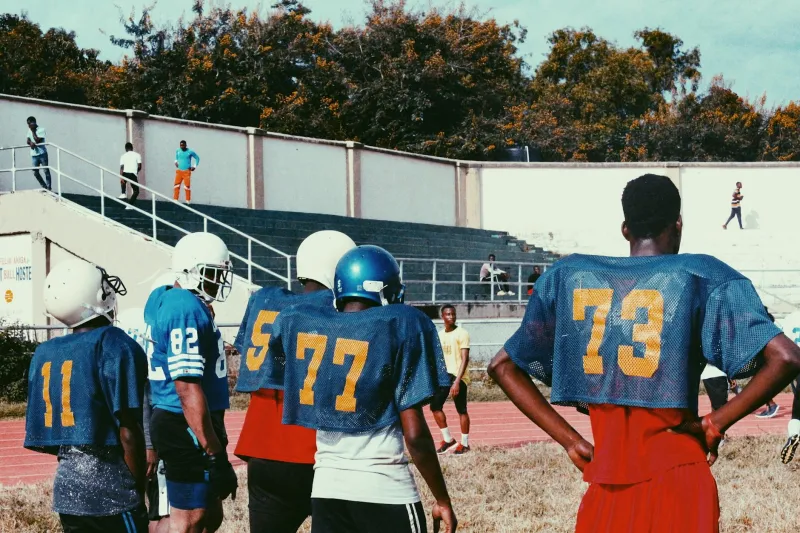
Training camps in the 1950s and 1960s were exercises in survival. Teams would practice twice daily in full pads under blazing sun, often for three or four hours at a stretch. Players were expected to push through nausea, dizziness, and exhaustion. Those who couldn't keep up were cut from the team.
The Green Bay Packers under Vince Lombardi epitomized this mentality. Lombardi forbade water during practice, believing it made players "soft." Players would sneak drinks from garden hoses behind equipment sheds, risking punishment if caught. The famous "Packers Sweep" was often run in 95-degree heat until players literally couldn't stand.
Medical Ignorance on Display
What seems criminally negligent today was simply accepted medical practice. Team doctors in the 1960s had virtually no understanding of heat illness, dehydration science, or the body's cooling mechanisms. The prevailing belief was that sweating indicated poor conditioning rather than a natural physiological response.
Many teams actively discouraged hydration. Players were told that drinking water during practice would cause cramps—the exact opposite of what we now know to be true. Some coaches weighed players before and after practice, punishing those who had "lost too much water weight" with additional conditioning.
Sunscreen was virtually unknown in professional sports. Players would coat themselves in baby oil or petroleum jelly, believing it would help them "tan better" and somehow become more resistant to heat. The idea that sun exposure could cause immediate health problems, let alone long-term skin damage, was rarely discussed.
The Body Count
The casualties were real and frequent. Heat stroke claimed multiple college and professional players throughout the 1960s and 1970s. Kidney damage from chronic dehydration was common but rarely diagnosed. Many players suffered heat-related health problems that shortened their careers and plagued them for decades after retirement.
Detroit Lions defensive tackle Alex Karras later described the team's training camps as "torture sessions." Players would regularly vomit from heat exhaustion, only to be told to "get back in there." The team's medical staff treated heat illness with salt tablets and black coffee—interventions that actually made dehydration worse.
The Miami Dolphins' early years were particularly brutal. Training in South Florida's oppressive summer humidity, players would lose 10-15 pounds during a single practice session. Coach Don Shula, despite his later reputation for innovation, initially embraced the "no water" philosophy that dominated the era.
The Science Revolution
The transformation began slowly in the late 1970s as sports medicine emerged as a legitimate field. Researchers started studying heat illness in athletes, discovering that dehydration dramatically impaired performance and posed serious health risks.
The first breakthrough came from understanding electrolyte replacement. Gatorade, developed at the University of Florida in 1965, took years to gain acceptance in professional football. Many coaches viewed sports drinks as unnecessary luxuries, preferring water or nothing at all.
By the 1980s, some teams began implementing basic heat protocols. Water breaks became more common, though still limited. Players were allowed to remove helmets during breaks in extreme heat. The changes were grudging and inconsistent.
Modern Marvels
Today's NFL heat management would seem like science fiction to players from the 1960s. Every practice includes mandatory water breaks every 20 minutes when temperatures exceed certain thresholds. Sidelines feature air-conditioned cooling tents, industrial fans, and ice baths.
Teams employ certified athletic trainers who monitor environmental conditions using sophisticated weather stations. Practice schedules are adjusted based on heat index readings. Players are weighed before and after sessions to track hydration levels.
The contrast is remarkable. Modern players consume carefully formulated electrolyte solutions throughout practice. They wear moisture-wicking fabrics designed to enhance cooling. Some teams use cooling vests filled with ice packs during breaks.
The Equipment Evolution
Helmet technology has revolutionized heat management. Modern helmets include ventilation systems that circulate air around players' heads. Shoulder pads are designed with cooling channels and lightweight materials that don't trap heat.
Uniform fabrics have transformed completely. The heavy cotton jerseys of the 1960s, which absorbed sweat and became heavier throughout practice, have been replaced by synthetic materials that wick moisture away from the body.
Even the practice fields themselves have evolved. Many teams now use specialized turf that stays cooler than natural grass, and some have installed misting systems around practice areas.
The Cultural Shift
Perhaps most importantly, the culture around heat and hydration has completely reversed. What was once seen as toughness is now recognized as dangerous stupidity. Coaches who deny water breaks face lawsuits and termination. Player safety protocols are mandated by league rules rather than left to individual team discretion.
Modern players are educated about heat illness symptoms and empowered to self-advocate. The "tough it out" mentality that dominated earlier eras has been replaced by scientific understanding and medical oversight.
The Price of Progress
Looking back, it's shocking how recently these changes occurred. Players who retired in the 1980s experienced both the old and new systems. They remember practicing without water and retiring with cooling tents on every sideline.
The human cost of the earlier ignorance was enormous. Countless players suffered heat-related health problems that could have been easily prevented. Some died. Many more endured unnecessary suffering in the name of "toughness."
Today's NFL, with its sophisticated heat management protocols and medical monitoring, represents one of sports' most dramatic safety evolutions. What once killed players is now carefully managed and largely preventable.
The next time you watch an NFL practice and see players ducking into air-conditioned tents between drills, remember: we were once a sport where asking for water could get you cut from the team.