The Unthinkable Reality
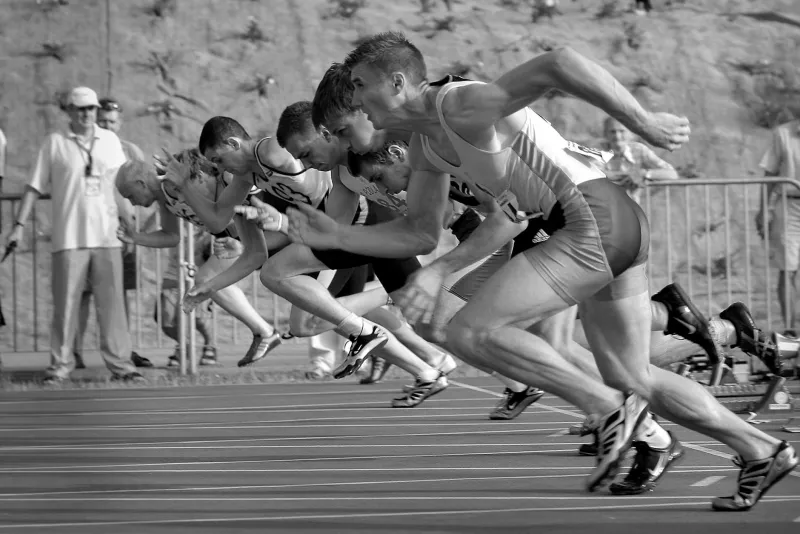
In 1968, Jim Hines became the first human to officially run 100 meters in under 10 seconds, clocking 9.95 at the Mexico City Olympics. The world went wild. Headlines proclaimed the breaking of an impossible barrier. Today? That time wouldn't even qualify Hines for most Division I college track teams.
This isn't just about one race or one athlete. Across virtually every track and field event, what once represented the absolute pinnacle of human achievement now looks quaint, almost pedestrian. The gap between yesterday's heroes and today's competitors reveals one of the most dramatic transformations in modern sports.
When Records Were Actually Slow
Consider the 1500 meters. In 1960, Herb Elliott's world record of 3:35.6 was considered superhuman. Sports writers called it "the perfect race." Fast forward to today, and that time would place Elliott roughly 40th in a typical NCAA Division I championship final. High school seniors routinely break 3:40, a time that would have been unthinkable for all but a handful of runners in Elliott's era.
The marathon tells an even more startling story. When Abebe Bikila won Olympic gold in 1960 running barefoot through Rome in 2:15:16, he was hailed as perhaps the greatest distance runner who ever lived. Today, that time wouldn't qualify him for the Boston Marathon in his age group. More than 500 Americans run faster than 2:15 every single year.
Distance running wasn't unique. In field events, the transformation is equally dramatic. The shot put world record from 1960 would barely crack the top 20 nationally at the high school level today. High jump marks that once seemed to defy physics now get cleared routinely at weekend college meets.
The Science of Speed
What changed? Nearly everything. In the 1960s, most elite athletes trained using methods that would make modern coaches cringe. Distance runners might log 40 miles per week – recreational joggers today often run more. Sprinters rarely lifted weights, believing muscle mass would slow them down. Recovery was whatever rest you could grab between your day job and evening practice.
Nutrition was guesswork dressed up as science. Athletes carb-loaded on spaghetti dinners and thought a steak before competition provided strength. Hydration meant water if you were lucky, often nothing at all. The idea of sports drinks, carefully calibrated nutrition plans, or supplement regimens was pure fantasy.
Training surfaces were whatever was available – often cinder tracks that would tear up your legs, or grass fields that turned to mud when it rained. Starting blocks were crude metal contraptions. Spikes were heavy leather boots with nails hammered through the sole.
The Modern Athletic Machine
Today's athletes inhabit a completely different universe. Training is guided by exercise physiology, biomechanical analysis, and data that tracks every heartbeat and stride. Elite runners might log 120+ miles per week, with each workout precisely calibrated for specific physiological adaptations.
Nutrition has become a science unto itself. Athletes know exactly how many grams of carbohydrates to consume, when to take specific supplements, and how to time their fuel intake for optimal performance. Recovery involves ice baths, compression therapy, massage, and sleep optimization that would seem like science fiction to earlier generations.
The equipment revolution alone accounts for significant improvements. Modern tracks provide energy return that older surfaces couldn't match. Running spikes weigh ounces and are engineered for specific events. Starting blocks are precision instruments that can be adjusted to the millimeter.
Beyond Individual Excellence
The transformation goes deeper than training and technology. The entire ecosystem around elite athletics has evolved. In the 1960s, most Olympic-level athletes held regular jobs. They trained before work, during lunch breaks, or after eight-hour shifts. The idea of being a full-time professional athlete was limited to a tiny handful of sports.
Today's elite athletes are supported by teams of coaches, nutritionists, physiologists, and medical staff. They train at high-altitude facilities designed specifically for performance enhancement. Their lives are structured entirely around getting faster, jumping higher, or throwing further.
The talent pool has exploded too. In 1960, organized youth sports barely existed. Most future Olympians discovered their talents by accident in high school. Today, promising athletes are identified in elementary school and funneled into sophisticated development programs that would have been unimaginable decades ago.
The Relentless March Forward
Perhaps most remarkably, this acceleration shows no signs of slowing. Current world records, which seem impossibly fast today, will likely look quaint to athletes competing in 2060. The same scientific revolution that transformed performance over the past 50 years continues to push the boundaries of what humans can achieve.
The next time you watch a high school track meet, remember: you're likely witnessing performances that would have been world records within living memory. Those teenagers jogging their warm-up laps are moving faster than Olympic champions once dreamed possible. It's a reminder of just how dramatically our understanding of human potential has evolved – and how much further it might still go.