Just Show Up and Play: The Era Before Youth Sports Came With a Liability Clause
Picture the scene: a Saturday morning in 1968, somewhere in suburban Ohio. A ten-year-old shows up to his first Pop Warner football practice wearing a hand-me-down helmet that doesn't quite fit, cleats his older brother outgrew two seasons ago, and absolutely zero medical documentation of any kind. His parents waved from the driveway. The coach blew a whistle. They played football.
 Photo: Pop Warner, via www.go4.io
No waiver forms. No emergency contact packets. No concussion protocol acknowledgment signed in triplicate. No neurological baseline test administered by a certified athletic trainer. Just kids, a field, and a coach who probably also ran the hardware store on Main Street.
That world is so far removed from today's youth sports landscape that it almost sounds fictional.
The Sandlot Era's Relationship With Risk
For most of the twentieth century, youth sports in America operated on a remarkably informal set of assumptions. Physical risk was considered a natural part of athletic participation — even a desirable one. Toughness was the goal. Getting hurt and continuing anyway was a point of pride, not a red flag. The idea that a kid's brain might need protecting in the same systematic way that a professional athlete's contract needed legal review simply wasn't part of the cultural conversation.
Parents weren't negligent. They were operating within the norms of their time, which held that sports built character precisely because they were hard, occasionally painful, and not especially supervised. A bloody nose meant you were playing hard. A turned ankle meant you taped it up and got back on the field. Anything more serious — a broken arm, a bad fall — got handled at the emergency room and was generally treated as a freak accident rather than a systemic failure.
The organizations running youth leagues weren't much different. Little League Baseball was founded in 1939. Pop Warner football dates to 1929. For decades, both operated with relatively minimal safety infrastructure by modern standards. Equipment requirements existed, but enforcement was inconsistent, and the science of pediatric sports injury was nowhere near developed enough to drive meaningful policy.
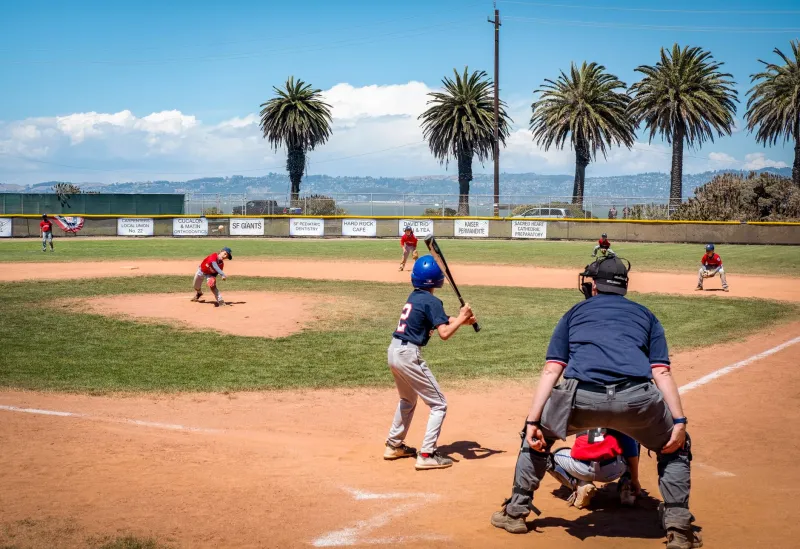
 Photo: Little League Baseball, via img.freepik.com
When the Culture Started Shifting
The transformation didn't happen overnight, and it wasn't driven by a single event. It was the accumulation of research, litigation, and cultural change over several decades that slowly rebuilt youth sports from the ground up.
Medical research in the 1980s and 1990s began producing clearer evidence about the long-term consequences of repetitive head impacts in young athletes. Pediatric sports medicine emerged as a legitimate specialty. Youth sports organizations started consulting with doctors and insurance providers rather than just coaches and volunteers. And American society, increasingly litigious and increasingly aware of institutional liability, began demanding formal structures around activities that had previously run on handshake agreements and parental trust.
By the early 2000s, mandatory helmet standards, certified first-aid requirements, and basic emergency action plans had become common across organized youth leagues. Then came the concussion conversation — and everything accelerated.
The Concussion Reckoning
The growing body of evidence connecting repeated head trauma to chronic traumatic encephalopathy (CTE) didn't just reshape professional football. It sent a visible shockwave through every level of the sport, including the youth game. Suddenly parents who had never thought twice about letting their eight-year-old play tackle football were asking hard questions. Leagues responded. Several states passed laws requiring baseline concussion testing for student athletes. Return-to-play protocols — once essentially nonexistent — became mandatory.
Today, a kid signing up for youth football in most parts of the country will encounter ImPACT testing, which establishes a cognitive baseline before the season begins so that any post-injury assessment has something to measure against. Coaches are required to complete concussion awareness training. Equipment must meet certified safety standards. A player who takes a significant hit and shows symptoms doesn't go back in the game — period.
The paperwork that once didn't exist now runs to multiple pages. Liability waivers, medical history forms, emergency contact information, photo ID requirements, and in some leagues, proof of insurance. It's a far cry from showing up with a hand-me-down helmet and a willing attitude.
Progress or Paranoia?
The honest answer is: probably both, depending on where you look.
The concussion protocols are hard to argue with. The evidence that young, developing brains are particularly vulnerable to repeated impact is compelling, and the long-term consequences of ignoring that evidence are severe. The children who played through head injuries in the 1960s and 1970s didn't know what was happening to them, and neither did their parents or coaches. Knowing now and doing nothing would be a different kind of failure entirely.
But there's a legitimate conversation to be had about whether some corners of the modern youth sports safety apparatus have drifted from protection into anxiety management. Whether the layers of documentation and liability coverage sometimes serve the organization more than the child. Whether the relentless structuring of youth athletics — every practice supervised, every drill certified, every risk documented — has quietly eliminated the kind of unstructured physical play that built resilience in previous generations.
None of that negates the value of the genuine advances. Kids are safer today, in measurable ways, than they were fifty years ago. The equipment is better. The medical knowledge is deeper. The institutional awareness of long-term risk is light-years ahead of where it was.
The Risks Were Always Real
Perhaps the most important thing to understand about this transformation is that the dangers didn't suddenly appear. They were always there — in every sandlot tackle, every line drive to the face, every awkward landing on a gymnastics mat. The difference is that now we're paying attention.
That might be the simplest way to describe the entire arc of change: not that youth sports became dangerous, but that we finally started taking the danger seriously. Whether we've found exactly the right balance between protection and freedom is still being worked out. But going back to the handshake era — back to the world where nobody asked any questions until something went very wrong — isn't progress. It's just nostalgia dressed up as toughness.