Leather Caps and Death Wishes: When Football Players Were Human Crash Test Dummies
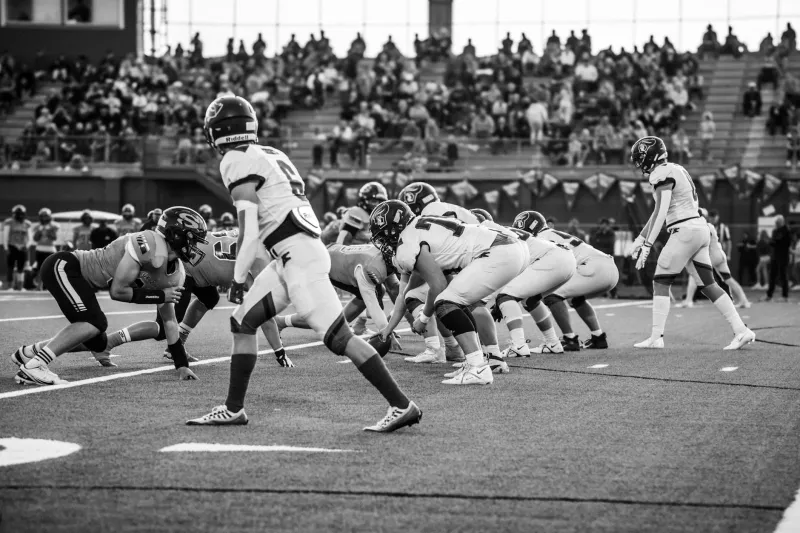
The Gladiators in Leather
In 1925, Red Grange, the most famous football player in America, took the field wearing a helmet that offered about as much protection as a baseball cap. Made of soft leather with minimal padding, it covered his head but left his face completely exposed. When opposing players grabbed his helmet and twisted his neck, or when he collided head-first with other players, the helmet absorbed roughly zero impact.
This wasn't considered a design flaw. It was just football.
For the first half-century of professional football, players understood that stepping onto the field meant accepting the very real possibility of permanent injury or death. The equipment was primitive, the rules offered little protection, and the culture celebrated players who could "take a hit" and keep playing. Looking back, it's remarkable that the sport survived its own brutality.
When Protection Was Optional
The National Football League's early years resembled a controlled riot more than a modern sporting event. Players wore leather helmets that were often little more than glorified caps, with no face masks, minimal padding, and leather that softened and lost effectiveness as soon as it got wet. Many players didn't wear helmets at all, considering them a sign of weakness.
Shoulder pads were small leather contraptions that covered only the top of the shoulders, leaving the collarbone, ribs, and lower back completely exposed. Hip pads were practically nonexistent. Players stuffed newspapers or rags into their uniforms for extra padding, creating a DIY approach to protection that would horrify modern equipment managers.
The most shocking aspect wasn't the equipment—it was the attitude. Players who got "dinged" or "had their bell rung" were expected to shake it off and return to the game immediately. Concussions weren't diagnosed; they were just part of playing football. A player who stayed down after a hit was considered soft, and softness could end a career faster than any injury.
The Casualty Reports
The human cost of this approach was staggering. In 1905, before the professional era, college football recorded 18 deaths and 159 serious injuries in a single season. The crisis was so severe that President Theodore Roosevelt threatened to ban the sport unless safety improvements were made.
Professional football wasn't much safer. Players regularly suffered broken noses, fractured skulls, and spinal injuries that would paralyze them for life. The Chicago Bears of the 1930s had a team doctor whose primary job wasn't preventing injuries—it was determining which players were conscious enough to continue playing.
Quarterbacks bore the brunt of this violence. Without face masks or targeting rules, they were sitting ducks for defensive players who could legally hit them in the head, grab their face masks (when they finally got them), and pile on long after the whistle. Y.A. Tittle, the New York Giants quarterback, famously played the 1964 season finale with blood streaming down his face from a head wound, creating one of football's most iconic photographs.
 Photo: Y.A. Tittle, via images.ctfassets.net
The Slow March Toward Safety
Change came gradually, often in response to specific tragedies rather than proactive safety measures. The first plastic helmets appeared in the late 1940s, but many players refused to wear them, claiming they were too heavy and restricted vision. Face masks weren't introduced until the 1950s, and even then, they were simple single bars that protected the nose but little else.
The NFL's attitude toward player safety remained shockingly casual well into the modern era. In 1978, the league finally banned "spearing"—using the helmet as a weapon to tackle opponents—but only after several players suffered career-ending spinal injuries. The rule change came decades after medical experts had warned about the dangers of head-first tackling.
Even as equipment improved, the culture of playing through injuries persisted. Brett Favre, who retired in 2010, famously played 297 consecutive games despite suffering numerous concussions that he hid from team doctors. His "iron man" streak was celebrated as a testament to his toughness, not recognized as a public health concern.
 Photo: Brett Favre, via cadw.gov.wales
The Modern Safety Revolution
Today's NFL bears little resemblance to the gladiatorial spectacle of its early years. Modern helmets are marvels of engineering, with impact-absorbing foam, advanced shell designs, and sophisticated padding systems that distribute force across the entire head. Face masks protect the entire face while allowing clear vision and easy breathing.
The transformation extends far beyond equipment. The league has implemented strict concussion protocols that require independent neurological evaluations before players can return to games. Targeting rules protect defenseless players, and penalties for helmet-to-helmet contact can result in ejections and hefty fines.
Rule changes have fundamentally altered how the game is played. Quarterbacks receive special protection, with strict penalties for hits to the head or below the knees. Receivers are protected while making catches, and players who show signs of head injuries are immediately removed from games and evaluated by medical professionals.
The Ongoing Battle
Despite these improvements, football continues to grapple with the long-term consequences of its violent past. Chronic Traumatic Encephalopathy (CTE), a degenerative brain disease linked to repeated head trauma, has been found in the brains of numerous former NFL players. The discovery has forced the league to confront the reality that even with modern safety measures, football remains inherently dangerous.
The contrast with the early era is stark. Players who once celebrated their ability to "take a hit" now file lawsuits against the league for concealing the long-term effects of head injuries. The culture that once demanded players ignore their symptoms now recognizes that brain health is more important than any game.
Technology Meets Tradition
Modern football embraces technology that would seem like science fiction to Red Grange and his contemporaries. Players wear sensors that monitor the force and frequency of impacts. Sideline tablets allow medical staff to conduct real-time neurological assessments. Advanced helmet designs use the same impact-absorption principles found in Formula 1 racing cars.
Some teams now use virtual reality systems to teach safer tackling techniques, allowing players to practice proper form without the physical contact that causes injuries. The NFL has invested millions in research partnerships with medical institutions to better understand and prevent brain injuries.
The Cultural Shift
Perhaps the most dramatic change isn't in equipment or rules—it's in how American society views player safety. The culture that once celebrated players who competed while injured now recognizes that protecting athletes' long-term health is more important than short-term entertainment.
Parents who grew up watching football are now reluctant to let their children play the sport, leading to declining youth participation rates. High schools are implementing stricter concussion protocols, and some have eliminated football programs entirely due to safety concerns.
The Price of Progress
This evolution comes with costs that extend beyond money. Critics argue that modern safety rules have made football less exciting, that overprotection of quarterbacks has created an artificial, video game-like experience. Others worry that the focus on safety has created a generation of players who are less tough and resilient than their predecessors.
But these concerns pale in comparison to the human cost of the old approach. The players who suffered brain damage in the leather helmet era didn't have the luxury of debating whether safety rules made the game less entertaining. They were too busy dealing with the consequences of a sport that treated their bodies as disposable.
Looking Forward
Football's transformation from a barely controlled brawl to a safety-conscious sport reflects broader changes in American society. We no longer accept that entertainment should come at the cost of human welfare, and we understand that protecting athletes' health is both a moral imperative and a practical necessity.
The sport continues to evolve, with new safety technologies and rule changes introduced regularly. The goal is to preserve what makes football exciting while eliminating the elements that make it unnecessarily dangerous.
The players who wore leather caps and played through concussions helped build football into America's most popular sport. But they paid a price that no modern athlete should have to pay. Their sacrifice reminds us that progress isn't just about improving performance—sometimes it's about preserving the people who make the performance possible.