Page One: Troubleshooting. Page Forty-Seven: Maintenance Schedule. The Manual That Actually Taught You Something.
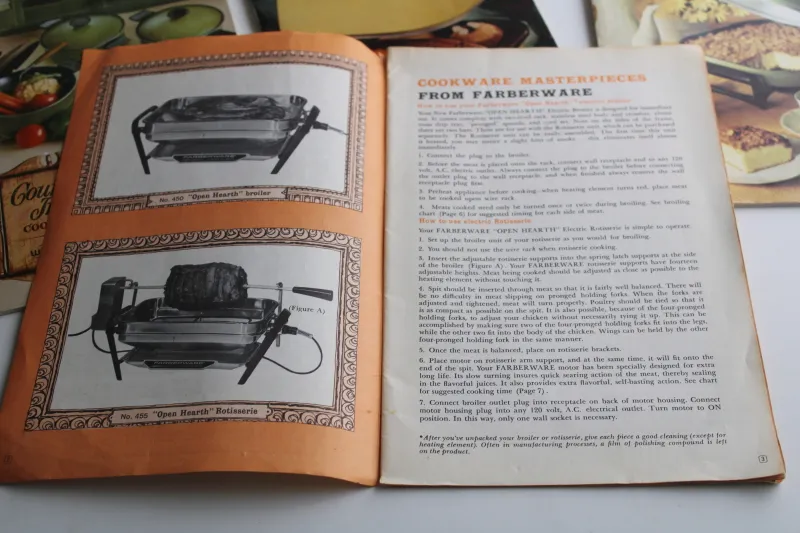
Photo: vintage appliance instruction manual 1970s product documentation booklet, via laurelleaffarm.com
Open a box today — a new blender, a smart thermostat, a wireless speaker — and you'll find roughly the same thing: a single folded sheet with diagrams, a QR code pointing you toward an app, and a customer service number that will put you on hold for forty minutes. If you're lucky, there's a URL for a PDF.
Now think about the last time you opened a product and found an actual manual. Bound pages. Indexed chapters. A troubleshooting section that walked you through problems in sequence. A parts diagram with every component labeled. A maintenance schedule that told you exactly when to clean what and how.
That document existed. For decades, it was standard. And its disappearance tells you something important about what manufacturers think of you — and what they want from you.
The Manual as a Statement of Respect
The golden age of the instruction manual runs roughly from the 1950s through the early 1990s. During that period, American consumers buying appliances, tools, electronics, and vehicles could reasonably expect to receive documentation that was comprehensive enough to make them genuinely competent with the product.
A Craftsman table saw from 1968 came with a manual that explained the physics of the blade, the purpose of each safety guard, how to calibrate the fence, and what to do when the motor ran hot. A new Kenmore washing machine included a booklet that covered not just operating instructions but belt inspection intervals, how to clean the pump filter, and what various sounds might indicate. These weren't just legal disclaimers dressed up as helpfulness. They were actual transfers of knowledge.
The implicit message was significant: you bought this, it's yours, and we're going to make sure you can use it fully and maintain it properly. The manufacturer's relationship with the customer didn't end at the cash register.
Why Manuals Got Thin — and Then Disappeared
Several forces combined to hollow out the instruction manual over the course of the 1990s and 2000s.
First, globalization made multilingual documentation necessary. A manual that once ran forty pages in English suddenly had to cover twelve languages, which meant either an enormous document or radical compression. Most manufacturers chose compression.
Second — and more importantly — product lifespans were shrinking by design. The concept of planned obsolescence wasn't new, but it became more aggressive as consumer electronics took over the market. If your DVD player was going to be replaced by a Blu-ray player in three years anyway, a comprehensive maintenance manual was a poor return on investment for the manufacturer. Why teach you to fix something they'd rather you replace?
Third, the internet provided a convenient excuse. Why print forty pages when the information could live online? The answer — that online documentation is harder to find, harder to use in a garage or kitchen, and subject to disappearing when a company updates its website or goes out of business — was never part of the pitch.
The result was a steady erosion. Manuals got shorter. Then they became quick-start guides. Then they became single sheets. Then they became QR codes.
What Self-Sufficiency Actually Looked Like
It's worth being specific about what was lost, because "a good manual" sounds abstract until you think about what it enabled.
A homeowner in 1975 with a malfunctioning furnace, a decent manual, and a Sunday afternoon could realistically diagnose and fix a significant percentage of common problems themselves. The manual told them what the parts were, what they did, what failure looked like, and what to do about it. The knowledge lived in their house, on their shelf, accessible without electricity or an internet connection.
That same homeowner today, with a modern HVAC system and a QR code pointing to a generic FAQ page, is functionally dependent on a service call. Not because they're less capable, but because the information has been deliberately withheld — either through omission or through engineering that makes the system opaque by design.
Consumer independence was a casualty of the shift, and it wasn't accidental.
The Right to Repair and the Return of the Manual
The right-to-repair movement, which has gained serious legislative momentum across multiple states, is in many ways a direct response to the world that replaced the instruction manual. When manufacturers lock down repair information, require proprietary tools, and design products that can't be serviced without authorized technicians, they're completing a process that started when they stopped explaining how their products worked.
Apple, John Deere, medical device companies — the fights happening in courtrooms and statehouses right now are about whether consumers and independent repair shops have the right to access the information and parts needed to fix things. That's a legal version of the argument that used to be settled by a well-written booklet in the box.
The iFixit community, YouTube repair channels with millions of subscribers, and the resurgence of repair cafes in cities across the country all point to the same hunger: people want to understand the things they own. The market for that understanding is enormous. It just stopped being served by manufacturers.
The Booklet Knew Something We've Forgotten
There's a version of progress where better products need less explanation because they simply work. That version exists, and it's real — some modern technology genuinely is more reliable and more intuitive than its predecessors.
But there's another version of progress that's less flattering: products designed to be used but not understood, maintained by subscription rather than skill, and replaced rather than repaired. In that version, the disappearance of the manual isn't a sign of improvement. It's a business model.
The manual that came with your grandfather's drill press wasn't a relic. It was a philosophy — one that said the person who buys a thing deserves to know how it works.
We could use a few more products that still believe that.