The Hi-Fi Was the Crown Jewel: When Americans Spent Real Money on How Music Sounded
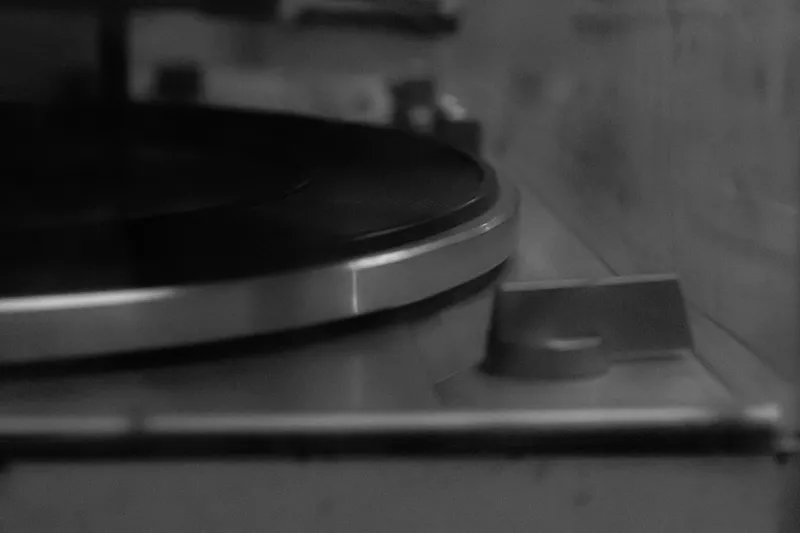
Walk into the right kind of house in 1972, and the living room told you something important about the person who lived there. Not the furniture, not the art on the walls — the stereo system. A Marantz receiver sitting in a wooden cabinet. A Thorens turntable with a needle that cost more than your first bicycle. A pair of floor-standing speakers positioned with the precision of religious objects.
This wasn't decoration. This was a belief system.
When Audio Was a Hobby, Not a Feature
High-fidelity audio — hi-fi, in the parlance of the era — emerged as a serious consumer pursuit in the late 1940s and exploded through the 1950s and 1960s. The technology was improving fast: magnetic tape, the LP record, stereophonic sound, and eventually the transistor all arrived in quick succession, and audiophiles chased every development with genuine passion.
The magazines that served this community — High Fidelity, Stereo Review, Audio — were thick with technical specifications, component reviews, and debates that read like arguments between theologians. What was the correct turntable tracking force? Which amplifier topology produced the most accurate sound? Was the new cartridge from Shure worth the premium over last year's model? These weren't casual questions. They were the substance of serious adult hobbies.
And the spending reflected that seriousness. A quality component stereo system in the 1970s — separate turntable, receiver, and speakers from reputable brands — could easily run $800 to $1,500. That's the equivalent of $5,000 to $10,000 in today's money. Some enthusiasts spent considerably more. There were people who owned stereo systems that cost more than their cars, and they did not consider this strange.
The Record Collection Was the Library
The equipment was only half of it. The records themselves were the other investment — and the other obsession.
A serious music fan in the 1960s or 1970s didn't just own albums. They curated them. They knew which pressing of a record sounded better than another pressing. They knew that the original Capitol Records release of a particular jazz album had a warmer low end than the reissue. They stored their records vertically, cleaned them with anti-static brushes, and handled them by the edges with the care of archivists.
Record stores were cultural institutions in a way that no streaming interface can replicate. The bins required navigation. You flipped through hundreds of covers, read liner notes standing in the aisle, made decisions that cost real money and couldn't be undone. The guy behind the counter at a good record shop was a trusted advisor. His recommendations carried weight because he knew what he was talking about and because you were about to spend $8 on his suggestion.
Buying a record was a commitment. You owned it. You lived with it. You listened to a whole side before you decided how you felt about it.
The Boom Box, the Car Stereo, and the Democratization of Loud
By the late 1970s and into the 1980s, audio obsession took new forms. The boom box — a portable stereo with built-in cassette player and speakers large enough to announce your presence from a block away — became a cultural artifact of urban America. It was expensive for what it was, often costing $200 to $400 at a time when that represented a significant chunk of a working person's monthly income. But it was also a statement: I care enough about music to carry it with me everywhere.
The car stereo followed a parallel track. Custom car audio became its own subculture, with competitions judging systems on sound quality and sheer volume. Teenagers and young adults spent hundreds, sometimes thousands of dollars on head units, amplifiers, and subwoofers, wiring their vehicles for sound quality that rivaled home systems. The car became a listening room on wheels. Parking lots on Friday nights were as much about whose system hit hardest as anything else.
All of it reflected the same underlying conviction: music was worth investing in. Sound quality was worth caring about. The experience of listening was something you could improve through effort and expenditure.
Then the Earbud Arrived and Changed the Conversation
The shift happened gradually and then all at once. The Walkman started it in 1979, moving music from the living room to the individual. The CD made the record collection feel obsolete. But the real rupture came with the iPod in 2001 and, shortly after, with streaming.
When a monthly subscription gives you access to virtually every recorded piece of music in human history, the economics of caring about audio equipment undergo a fundamental transformation. Why invest $2,000 in a turntable and amplifier when you can hear anything you want through a $25 pair of earbuds?
The answer, for most people, is: you don't. Spotify and Apple Music didn't just change how we accessed music. They changed what music was worth — or rather, what the experience of listening felt like it was worth. The per-stream royalty rate paid to artists is a fraction of a cent. The mental accounting we do with music now assigns it approximately the same value.
The audiophile community still exists. Vinyl sales have actually been growing for over a decade, driven partly by nostalgia and partly by genuine appreciation for the format's sonic characteristics. High-end audio equipment still gets made and still gets bought. But it's a niche within a niche now — a hobbyist pursuit rather than the mainstream aspiration it once was.
What Happened When It Stopped Being Precious
There's a reasonable argument that the democratization of music is an unambiguous good. More people can hear more music more easily than at any point in human history. Barriers of cost and geography that once kept people from entire genres and traditions have dissolved entirely.
But something also happened to our relationship with the thing itself. When music is everywhere and essentially free, it becomes background. It fills space. It accompanies other activities. The idea of sitting down in a good chair, in front of a good system, with a record you've chosen deliberately, and doing nothing else but listening — that idea has become almost countercultural.
The hi-fi sitting in the living room was a declaration that music deserved your full attention. That it was worth the money, the space, the expertise, the ritual. That some things are better when you take them seriously.
We traded that in for convenience. Most days, the trade feels worth it. But every once in a while, when a song comes through a phone speaker and sounds like it's coming from the bottom of a tin can, it's worth remembering what we used to think music deserved.