You Trusted the Can and That Was That: The Long Road to Knowing What You're Actually Eating
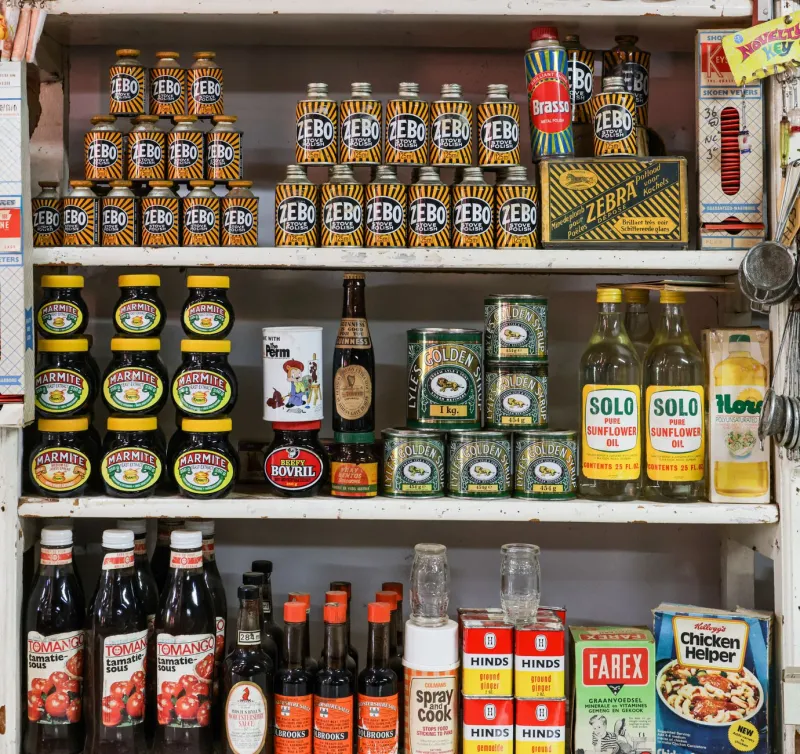
There's a jar of something in the back of your pantry right now. Flip it over and you'll find a nutrition facts panel, an ingredient list running twelve lines deep, allergen callouts in bold, and probably a QR code linking to the brand's sustainability page. You might glance at it. You might not. Either way, the information is there.
It wasn't always there. For most of the twentieth century, the American grocery store operated almost entirely on faith.
The Brand Was the Whole Story
Picture a kitchen in 1955. A housewife pulls a can of soup from the shelf, and the decision she made at the store wasn't based on sodium content or a list of preservatives — it was based on the label. The color. The name. Whether her mother bought the same brand. Advertising did the rest.
Food companies understood this completely. The pitch wasn't "here's what's inside." The pitch was "trust us." And for a generation raised on wartime rationing and postwar abundance, trust was easy to give. Processed food felt like progress. A bright can of something uniform and reliable was a small daily luxury.
Ingredient lists existed in a limited form before federal regulation tightened, but they were often vague, incomplete, or buried. The word "flavorings" could mean almost anything. "Vegetable shortening" didn't tell you much. And unless you had a specific medical condition that made you pay attention, most Americans simply didn't ask.
The Regulation That Changed Everything
The modern era of food transparency didn't arrive all at once. It came in waves, pushed forward by public pressure, health crises, and legislation that the food industry often fought every step of the way.
The 1906 Pure Food and Drug Act was a start — it came out of a genuine national panic after Upton Sinclair's The Jungle described conditions in meatpacking plants that made readers physically ill. But even that landmark law was mostly about preventing outright fraud and contamination. It didn't demand the kind of nutritional detail we expect today.
The real turning point came in 1990. The Nutrition Labeling and Education Act required standardized nutrition facts panels on most packaged foods sold in the United States. For the first time, calories, fat, sodium, and key nutrients had to appear in a consistent, readable format. It sounds basic now. At the time, it was a seismic shift.
Allergen labeling followed in 2004 with the Food Allergen Labeling and Consumer Protection Act, which required manufacturers to clearly identify the eight most common allergens. For millions of Americans with food allergies, this wasn't a convenience — it was a matter of survival.
From Skepticism to Obsession
Once the information became available, something interesting happened: Americans didn't just read it passively. They started using it to make different choices.
The low-fat craze of the 1980s and 90s — which predated mandatory labeling but ran parallel to growing nutritional awareness — showed just how powerfully food marketing and health claims could reshape what people actually bought. "Fat free" became a selling point even when the product was loaded with sugar. People were paying attention, but they were also being misled in new and creative ways.
The internet accelerated everything. By the early 2000s, health forums and early food blogs were picking apart ingredient lists and comparing products in ways no mainstream consumer had ever done before. Then came smartphones and apps like MyFitnessPal, which launched in 2005 and eventually gave users the ability to scan a barcode and instantly pull up the full nutritional breakdown of virtually anything in a grocery store. The information that once required a degree in food science to interpret was now sitting in your pocket.
Today, a meaningful portion of American consumers read nutrition labels regularly. Dietary frameworks — keto, paleo, gluten-free, whole30 — have created entire subcultures built around scrutinizing ingredients. Restaurant chains with more than twenty locations are now required to post calorie counts on their menus. The FDA updated the nutrition facts panel design in 2016 for the first time in over two decades, making serving sizes more realistic and putting calorie counts in larger type.
What We Actually Eat Now
Here's where it gets complicated. More information hasn't automatically meant healthier eating. Obesity rates have continued to climb even as nutritional labeling became universal. The food environment is more complex than any label can fully capture — ultra-processed foods are engineered to be consumed in ways that make rational label-reading almost beside the point.
But awareness has genuinely shifted behavior in specific ways. Sodium consumption has become a real conversation for millions of Americans who never thought about it before. Trans fats — once ubiquitous in processed foods — were effectively eliminated from the food supply after the FDA ruled they were no longer generally recognized as safe. That happened partly because consumers and researchers could finally see them on labels and ask questions.
The transparency movement has also created a market for honesty. Brands built entirely around clean ingredient lists — RXBar famously puts its entire ingredient list on the front of the wrapper — have found real audiences. Consumers who care deeply about sourcing have driven growth in organic, non-GMO, and locally produced foods. None of that market exists without the underlying expectation that you deserve to know what you're eating.
The Distance We've Traveled
It's worth sitting with that for a second. For most of American history, the people selling you food had no legal obligation to tell you what was in it in any meaningful way. You bought based on trust, advertising, and habit. The idea that you had a right to that information — a right to make an informed decision about what went into your own body — was genuinely radical not that long ago.
Were we ever really okay with that? Apparently, yes. Mostly because we didn't know what we were missing.
Now we scan barcodes in the cereal aisle and argue about seed oils online. The pendulum has swung hard. But given where we started, that might not be the worst thing.