Blind at the Plate: When Baseball Was Pure Guesswork

Stepping Into the Unknown
Imagine walking into the batter's box to face a pitcher you've never seen before, with no video footage, no statistical breakdown, and no advance scouting report. Your only preparation? Maybe a teammate mentions the guy "throws hard" or "has a good curveball." For most of baseball history, this wasn't a nightmare scenario—it was Tuesday afternoon.
In 1947, when Jackie Robinson broke baseball's color barrier, he faced this reality nearly every game. There was no video library of opposing pitchers, no spray charts showing where they liked to attack the strike zone, and certainly no iPads in the dugout displaying real-time pitch sequences. Robinson succeeded through pure athletic instinct and the kind of in-game adaptation that modern analytics have largely replaced.
The Art of Dugout Intelligence
Before the digital revolution, baseball's intelligence network operated like a Cold War spy ring. Information traveled through handwritten notes, whispered conversations, and the occasional long-distance phone call between friendly coaches. Teams kept manila folders stuffed with scouting reports that read more like diary entries than data analysis.
"Fastball pitcher, likes to work inside on righties, throws a slider that breaks late," might be the extent of advance notice a hitter received. Compare that to today's hitters, who study heat maps showing exactly where each pitcher locates his four-seam fastball in different counts, complete with spin rate and release point analysis.
The Boston Red Sox of the 1970s employed exactly one advance scout—a part-time position that paid about as much as a good restaurant server. Today, major league teams employ entire departments of analysts who break down opposing pitchers frame by frame, identifying everything from subtle grip changes to fatigue patterns.
When Memory Was the Database
Veteran players became walking encyclopedias of pitching tendencies, but their knowledge was limited to personal experience and secondhand stories. Ted Williams, arguably the greatest hitter who ever lived, famously kept detailed mental notes on every pitcher he faced. But even Williams could only draw from his own at-bats—he had no access to how those same pitchers attacked other left-handed hitters.
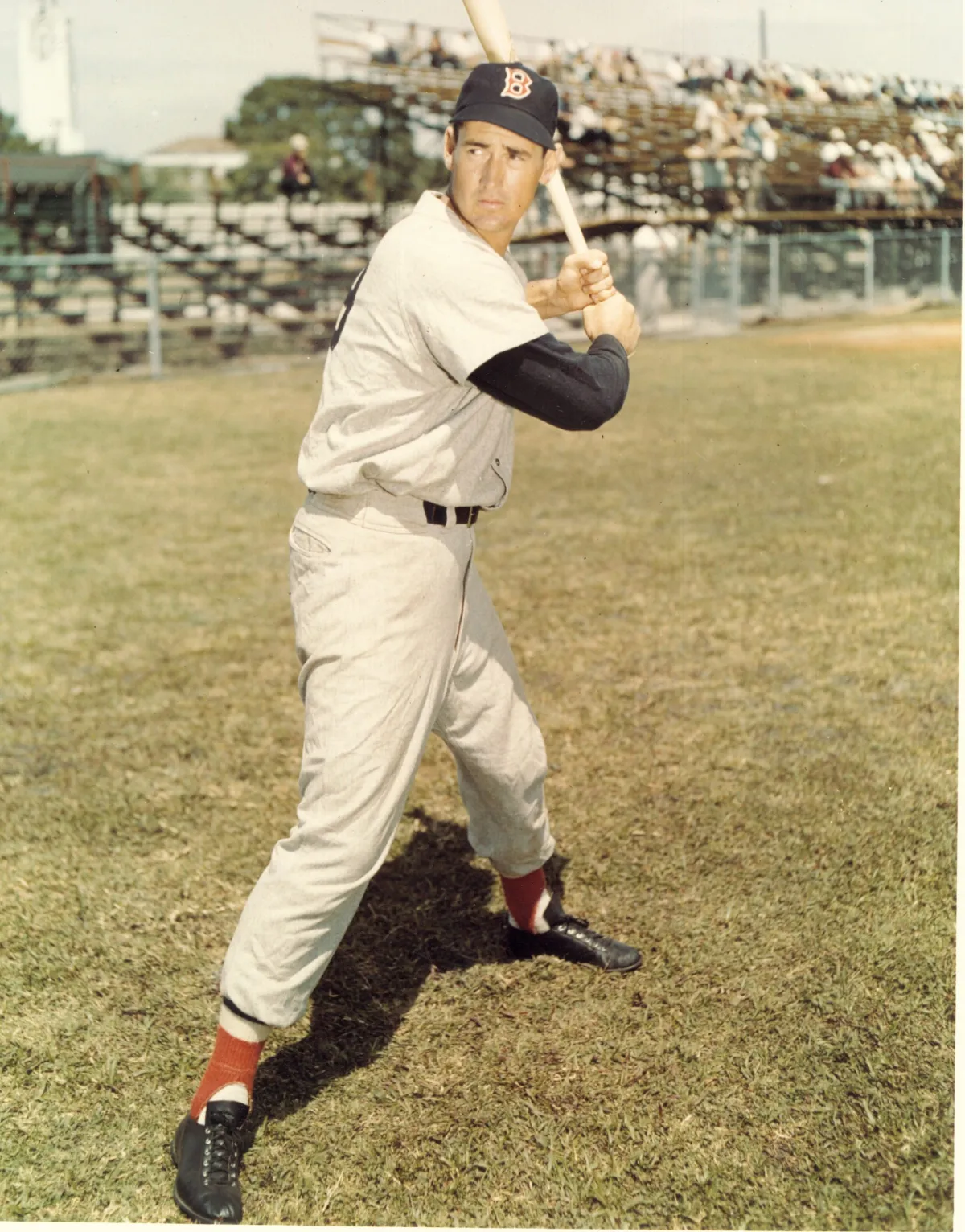 Photo: Ted Williams, via bostonbaseballhistory.com
This created a bizarre information economy where knowledge was hoarded like gold. Star players rarely shared their hard-earned insights with teammates, viewing pitcher recognition as a competitive advantage. The idea of a team-wide database of opposing tendencies was not just technologically impossible—it was culturally foreign.
The Ritual of First Encounters
Facing an unknown pitcher became its own art form. Hitters developed elaborate first-at-bat rituals designed to gather intelligence. They'd take pitches just to see arm action, foul off strikes to observe break patterns, and study the catcher's setup for clues about what was coming.
Babe Ruth once described his approach to unfamiliar pitching: "I'd watch him warm up real careful-like, see how his ball moved, then just try to time him up in that first at-bat. After that, you either had him figured or you didn't."
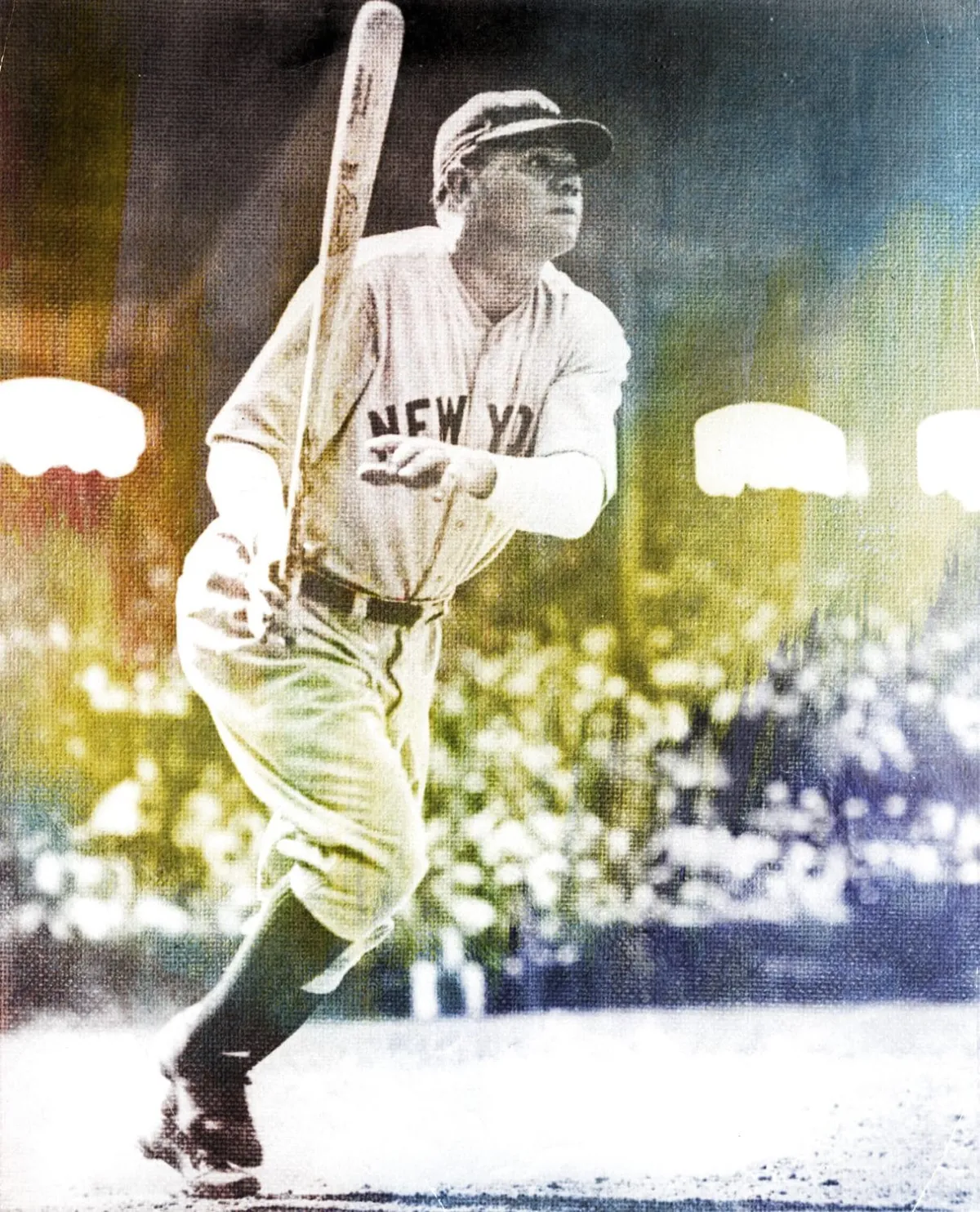 Photo: Babe Ruth, via www.statspros.com
This trial-and-error approach meant that great hitters weren't just physically gifted—they were exceptional pattern recognition machines who could decode a pitcher's arsenal in real time. It was baseball's version of speed chess, with careers hanging in the balance of split-second adjustments.
The Revolution Arrives
The transformation began slowly in the 1980s with the introduction of video equipment, but the real revolution came with computerized pitch tracking in the 2000s. Suddenly, every pitch thrown in the major leagues was catalogued, measured, and analyzed. The PITCHf/x system, installed in all MLB stadiums by 2007, captured data that would have seemed magical to earlier generations.
Today's hitters know not just what pitches are coming, but the precise velocity, spin rate, and movement profile of each offering. They study video of their previous at-bats against specific pitchers, complete with slow-motion analysis of release points and ball movement. The guesswork that defined hitting for over a century has been systematically eliminated.
Lost in Translation
This analytical revolution has fundamentally changed what it means to be a successful hitter. Modern players optimize their swings based on launch angle data and exit velocity metrics that didn't exist 20 years ago. They know exactly which pitches they should attack and which they should take, removing much of the intuitive decision-making that once separated good hitters from great ones.
Some old-school observers argue that something essential has been lost in this transformation. The romantic notion of the pure hitter—someone who succeeded through instinct and feel rather than spreadsheets—has largely disappeared. Today's game is undeniably more efficient, but perhaps less mysterious.
The Numbers Don't Lie
The impact of advanced preparation is undeniable in the statistics. Modern hitters post dramatically different numbers in their first career at-bat against a pitcher compared to subsequent encounters, suggesting that familiarity breeds success. In the pre-video era, this learning curve was much flatter, indicating that hitters were essentially starting from scratch each time they faced unfamiliar pitching.
Strikeout rates have increased as pitchers have become more specialized and hitters have become more selective, waiting for specific pitches in specific counts. The days of putting the ball in play and hoping for the best have been replaced by calculated aggression based on probability matrices.
What We've Gained and Lost
Modern baseball is unquestionably more sophisticated than its predecessor, but it's also more predictable. The element of surprise that once made every at-bat a small drama has been largely algorithmatized away. Today's hitters are better prepared, but they're also more constrained by data-driven expectations.
The old-timers who succeeded in the age of uncertainty possessed a different kind of baseball intelligence—one that valued adaptability over preparation, instinct over analysis. Whether that represents a loss or simply evolution depends on your perspective, but there's no denying that we've moved from a game of beautiful uncertainty to one of calculated precision.
In the end, perhaps the most remarkable thing about baseball's analytical revolution is how recently it occurred. Players who retired just 20 years ago operated in a fundamentally different universe of information scarcity, making their accomplishments all the more impressive in retrospect.