The Kid Nobody Was Watching Who Went On to Change Everything: Growing Up Before Your Potential Was a Public Record
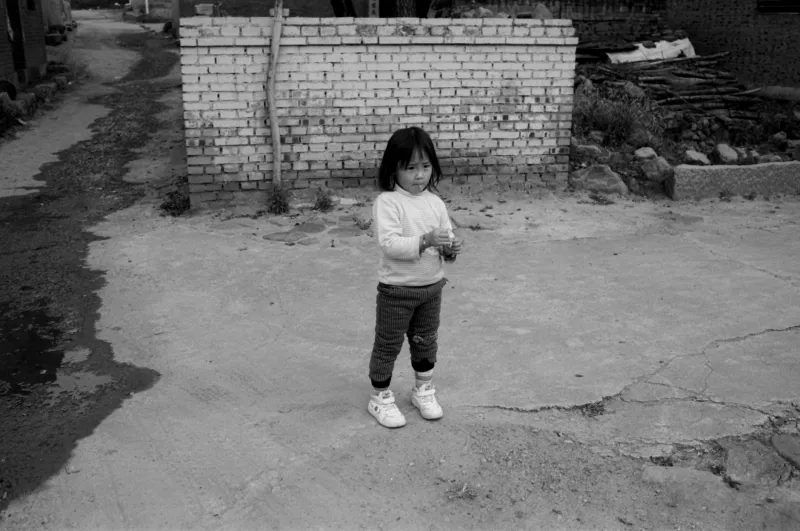
There's a particular American story that used to be common enough that we had a name for it: the late bloomer. The kid from nowhere who showed up, seemingly out of nowhere, and turned out to be exceptional. The mechanic who became an engineer. The farm kid who became a senator. The quiet girl from a mid-sized city who wrote a novel that changed how people thought.
That story still happens. But it's getting harder to tell, because the conditions that made it possible — anonymity, time, the freedom to develop without an audience — are disappearing fast.
What Ambition Looked Like Before It Was Documented
Go back fifty years, and the path from talented kid to successful adult looked very different than it does today. Talent was largely local. If you were good at math, your teacher knew. If you were a gifted athlete, your town knew. If you had a remarkable singing voice, your church knew. That was roughly the radius of your reputation, and it stayed that way until you did something that pushed it outward.
This had obvious downsides. Talented kids in communities without resources — rural areas, lower-income neighborhoods, places without strong schools or networks — could easily go unnoticed entirely. Opportunity was unevenly distributed in ways that were genuinely unfair.
But there was something valuable in the smallness of that world too. You had room to be bad at things before you got good at them. You could fail a class, quit a sport, change your mind about what you wanted to be — all without it becoming part of any permanent record that followed you forward. Your teenage years were largely private, which meant they could be genuinely experimental.
The Audit Trail Childhood Now Produces
Today, childhood achievement is systematically tracked, shared, and used to predict futures in ways that would have seemed extraordinary — and a little unsettling — to previous generations.
It starts early. Academic performance is measured, ranked, and compared almost from the beginning of formal schooling. By middle school, kids are being sorted into tracks that shape their college options. By high school, the college admissions process has turned teenage life into a resume-building exercise, with extracurriculars chosen for their signal value as much as their actual interest to the kid participating.
Outside of school, the documentation is even more pervasive. Parents share their children's accomplishments on social media — the science fair win, the travel baseball team, the first piano recital, the acceptance letter. These posts are well-intentioned, but they create something new: a public record of childhood achievement that the child didn't choose to create and can't easily remove.
For genuinely talented young people, systems now exist to identify and track them from remarkably early ages. Youth sports recruiting databases catalog middle schoolers. Academic talent searches test kids as young as seven. Tech companies run coding competitions for high schoolers and flag the winners for future hiring pipelines. The identifying and tracking of potential has become an industry.
The Pressure of Being Seen Too Soon
There's a meaningful body of research suggesting that the way we frame achievement to children matters enormously — that kids told they are talented often become more risk-averse than kids told they worked hard, because talented kids have a label to protect. Scale that dynamic up to a world where the label is attached publicly, in a format that persists, and you start to see a problem.
When your potential is on the record, failure becomes more costly — not just emotionally, but reputationally. The kid who was publicly identified as a future tech prodigy at fifteen has more to lose by pivoting to art at twenty than the kid who developed both interests quietly, without anyone keeping score. Public tracking creates a kind of path dependency: the further along a documented trajectory you are, the harder it is to leave it without the departure feeling like failure.
This may partly explain something researchers have been noting for years: that young Americans are taking fewer risks, changing direction less often, and reporting higher levels of anxiety around career and identity than previous generations did at the same age. When your development has always had an audience, the idea of doing something uncertain — something you might be bad at, at least initially — becomes genuinely frightening.
The Upside That's Real
It would be dishonest to ignore what better tracking and visibility have actually delivered. Talented kids from underserved communities who might once have gone entirely unnoticed now have more pathways to recognition than they used to. Scholarship programs, talent identification systems, and social media have all created routes to opportunity that didn't exist before.
The kid in rural Mississippi who writes extraordinary code can now reach an audience and find a community in ways that simply weren't available in 1975. That's not nothing — that's genuinely important. Expanding who gets seen is a real moral good, even if the seeing itself creates new pressures.
The question isn't whether visibility is good or bad in the abstract. It's whether we've built systems thoughtful enough to give young people visibility without stealing the private space they need to actually become themselves.
Room to Become Someone Nobody Expected
The late bloomer story was never just about talent arriving late. It was about the conditions that allowed a person to develop on their own timeline, without the weight of external expectations bending their trajectory before they'd figured out what they actually wanted.
Were we ever really here, in a world where a kid could grow up without anyone keeping score? Where the path to adulthood didn't require building a brand before you'd built a self?
Some of us were. And the people who emerged from that quieter world — shaped by failure, changed by pivots, unburdened by the record of who they used to be — often turned out to be exactly the kind of people nobody saw coming.