Four Pages That Took a Week to Write and a Week to Arrive: When a Letter Actually Meant Something
At some point in the last thirty years, we made a trade we didn't fully think through. We gave up slowness in exchange for speed, and we told ourselves we were getting more connection out of the deal. We weren't. We were getting more contact — which turns out to be a very different thing.
The handwritten letter is almost gone now. Not entirely — people still write them, occasionally, for weddings and funerals and moments that feel too important for a text. But as a regular form of communication, as the primary way people maintained relationships across distance, it has essentially vanished. And with it went something that's genuinely hard to replace.
What It Actually Took to Write a Letter
Let's be specific about what we're talking about, because it's easy to romanticize the past without reckoning with what it actually involved.
Writing a letter took time. Not just the physical act of putting pen to paper — though that itself required a kind of slowing down that feels almost foreign now — but the thinking that preceded it. You couldn't fire off a letter in thirty seconds the way you can fire off a text. You had to decide what you wanted to say before you said it. You had to organize your thoughts, consider your words, and commit to them in a way that digital communication simply doesn't require.
If you wrote something you regretted, you couldn't unsend it. The letter went out into the world and arrived in someone else's hands, permanent and physical. That permanence changed the way people wrote. It created accountability. It created care.
And then there was the waiting.
The Anticipation Nobody Talks About
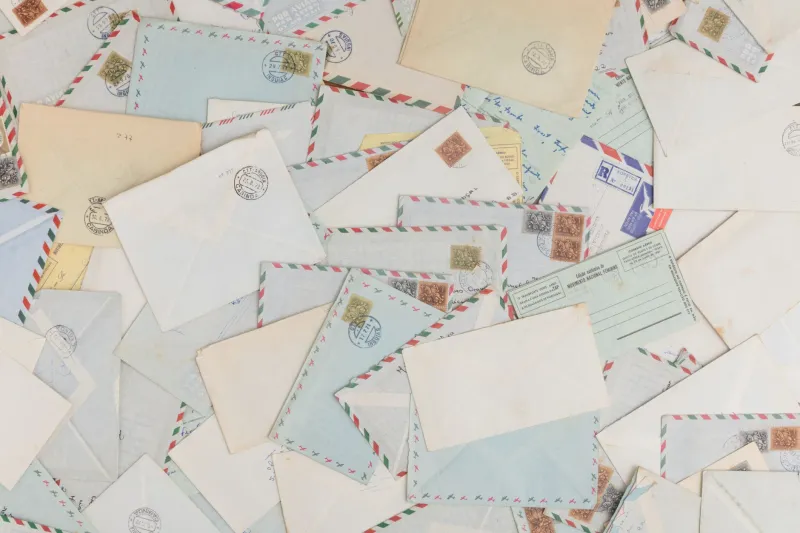
In the pre-email era, receiving a letter was an event. Not a dramatic one, necessarily — but something you actually looked forward to. If you'd sent a letter to a friend in another city and were waiting for a reply, you checked the mailbox with genuine anticipation. There was a window of days, sometimes weeks, during which the answer might arrive. And when it did, you sat down and read it properly. You didn't skim it. You didn't read it while doing three other things. It had traveled to reach you, and you gave it the respect of your full attention.
This is almost impossible to recreate now. Email arrives constantly. Texts arrive constantly. The individual message has no weight because there are always more messages coming. Nothing feels rare, so nothing feels significant.
Psychologists who study communication have pointed out that anticipation is a core component of emotional experience — that waiting for something actually increases the value we assign to it when it arrives. We've engineered anticipation almost entirely out of our communication systems, and we act surprised when messages feel hollow.
What People Actually Wrote About
Here's something worth sitting with: letters forced people to reflect. Because you were writing about time that had already passed — days or weeks of life since your last exchange — you had to look back, consider what had happened, and decide what was worth sharing. That process of selection and reflection produced a different kind of communication than the real-time stream of updates we send now.
Read letters from almost any era of American history and you'll find something striking: people wrote about their inner lives. Not in a therapy-speak, oversharing way, but in a genuine attempt to convey what something felt like, not just what happened. They had time to think about it. They had the space to go deeper than a status update.
Contrast that with a typical modern text exchange, and the difference is almost comical. "Haha yeah." "Same tbh." "Sounds good." We are communicating at a pace and volume that would have been incomprehensible to previous generations, and somehow saying less.
The Archive We're Not Building
There's a practical loss here too, one that historians and archivists have been worried about for years. Letters survive. They get saved in shoeboxes, donated to libraries, passed down through families. The correspondence of ordinary Americans from the 19th and early 20th centuries tells us more about daily life, emotional experience, and social reality than almost any other source.
Emails get deleted. Texts disappear when phones break or change. The digital record of our inner lives is fragile in ways that a physical letter, stuffed in a drawer for eighty years, simply isn't. Future historians trying to understand what it felt like to be alive in 2024 are going to have a strange problem: more data than any previous era, and far less intimacy.
Speed Is Not the Same as Depth
None of this is an argument for going back to quill and ink. Speed in communication has real value — in emergencies, in logistics, in maintaining contact across a world that moves fast. The ability to reach someone instantly, anywhere, is genuinely remarkable.
But we've let speed become the default for everything, including the conversations that deserve more. We text condolences. We email apologies. We send birthday wishes in a format that takes four seconds to compose and will be forgotten by both parties within the hour.
The letter didn't just carry words. It carried the evidence of effort — the handwriting, the crossed-out lines, the choice of stationery, the stamp. All of it communicated something before you even read a word: I sat down and thought about you.
Were we ever really here, in that slower world where a message took days to arrive and meant something when it did? Some of us were. And if you've ever held an old letter from someone you loved — really held it, really read it — you already know what we gave up.