She Never Measured a Thing and Everything Tasted Perfect: The Kitchen Wisdom We Stopped Passing Down
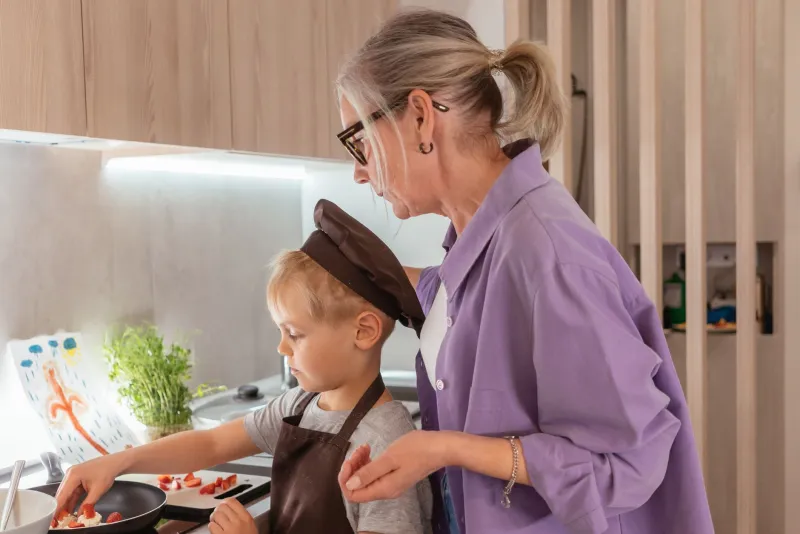
There's a particular kind of frustration that hits when you ask an older relative how they make a dish you've loved your whole life. You pull out your phone, ready to type notes, and they look at you like you've asked them to explain breathing.
"A handful of flour. Enough butter. Cook it until it smells right."
That's not a recipe. That's a language — one most of us no longer speak.
The Kitchen Before the Measuring Cup Ran Everything
For most of American culinary history, cooking knowledge didn't live in books or on cards tucked into a recipe box. It lived in people. Specifically, it lived in the hands and instincts of whoever had cooked the most meals in a given household — and that knowledge transferred the way all important things used to transfer: by standing next to someone and watching.
You learned that pie dough needed to feel a certain way when you pressed it, not reach a specific temperature. You learned to season by tasting, not by measuring. You knew the roast was done when the house smelled a particular way, not when an app sent you a notification. These weren't shortcuts. They were the actual skill — developed over years of repetition, failure, adjustment, and eventual confidence.
This kind of cooking was deeply personal. Your mother's chili wasn't a recipe for chili. It was her chili, shaped by her preferences, her adjustments over decades, her response to whatever was in the pantry on a given Tuesday. There was no standardized version. The dish existed only as long as she was around to make it.
What Happened When We Started Writing Everything Down
The shift didn't happen overnight. Cookbooks had been around for centuries, but for most American households, they were supplemental — reference material for special occasions or unfamiliar dishes, not daily guides. The real change accelerated in the latter half of the 20th century, as convenience culture crept into the kitchen and the idea of cooking "correctly" started to take hold.
By the time food television exploded in the 1990s and early 2000s, cooking had become something you watched as much as something you did. Suddenly there were techniques to master, ratios to memorize, and celebrity chefs explaining the right way to do things that home cooks had been doing intuitively for generations. The message, however unintentional, was that cooking required expertise — and expertise required instruction.
Then came the internet, and the recipe blog became an institution. Today, there are millions of recipes online for virtually every dish imaginable, each one with precise measurements, step-by-step photos, and comment sections full of people asking whether they can substitute almond milk. We have more cooking information available to us than any generation in history.
And yet, a striking number of Americans say they don't feel confident cooking without a recipe in front of them.
The Consistency Bargain
To be fair, we gained something real in this trade. Standardized recipes made cooking more accessible. Someone who grew up in a household where no one cooked — or where the cooking wasn't great — could now follow instructions and produce a decent meal. Baking in particular benefited from precision, since the chemistry involved genuinely rewards accurate measurement.
Food safety improved. Cooking times became more reliable. People with dietary restrictions could actually know what was in their food. The democratization of culinary knowledge meant that a first-generation home cook in Omaha could replicate a dish they'd eaten once in New Orleans, step by step, with a reasonable chance of success.
Those aren't small things.
But consistency and creativity don't always point in the same direction. When you cook from a recipe, you're executing someone else's vision. When you cook from instinct and experience, you're having a conversation with the ingredients — adjusting, tasting, making decisions. One produces reliable results. The other produces yours.
What Gets Lost When the Recipe Holder Dies
The saddest version of this story plays out in families all the time. Someone passes away, and suddenly the dish they made — the one that defined every holiday, every Sunday dinner, every comfort meal — is gone. Not because the recipe didn't exist, but because the recipe was them. Their adjustments, their timing, their particular understanding of how a dish should feel.
People try to reconstruct it. They call relatives, compare notes, search online for something close. Sometimes they get pretty near. But it's never quite the same, and everyone at the table knows it.
Oral culinary tradition was imperfect and inconsistent, sure. But it was alive. It changed as the cook changed, traveled with families across generations, and carried the fingerprints of everyone who had made it before. A printed recipe doesn't do that. It freezes a moment.
Cooking Without a Net
The good news is that the instinct-based approach to cooking isn't entirely gone. It's just been pushed to the margins. There are still home cooks — often older, often self-taught — who operate entirely by feel, who can look at what's left in the refrigerator and produce something worth eating without consulting anything.
And there's a growing counter-movement. Some cooking educators are pushing back against recipe dependency, encouraging people to learn ratios and techniques rather than specific dishes — to understand why something works so they can adapt it, not just follow it. It's a quieter trend than the latest food blog craze, but it's real.
Were we ever really here, in those kitchens where cooking was a living skill passed from hand to hand? Some of us were. Some of us watched it happen without realizing we were watching something disappear.
The measuring cup isn't the enemy. But maybe it shouldn't always be the starting point either.