Dial Tone and Rumors: The Strange Isolation of Baseball's Road Trip Era
Dial Tone and Rumors: The Strange Isolation of Baseball's Road Trip Era
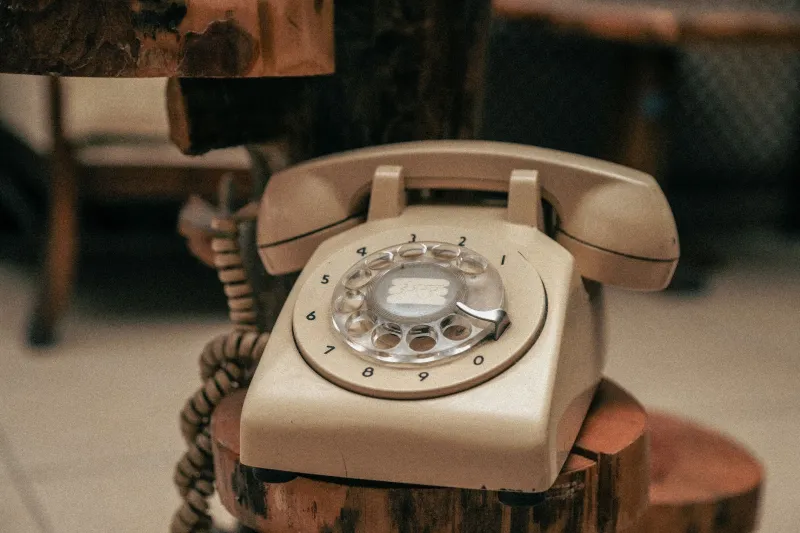
Imagine finishing a night game in Cleveland, riding a bus back to a mid-range hotel, and having absolutely no idea what happened in your division that evening. No score alerts. No push notifications. No group chat with your agent. Just a hallway payphone, a handful of quarters, and whatever your wife could tell you before the long-distance charges started adding up.
That was the reality for professional baseball players for most of the twentieth century. And honestly, most of them didn't think twice about it.
Life in the Information Vacuum
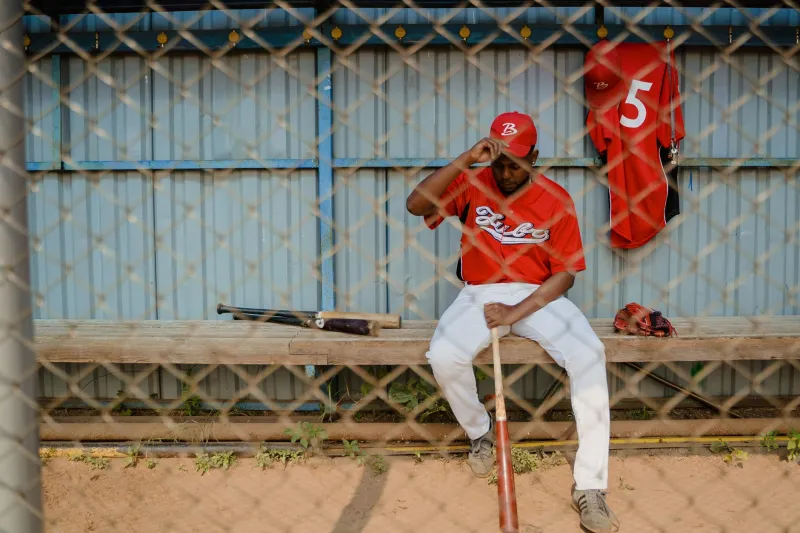
The modern baseball player carries a device in his back pocket that streams live games, delivers real-time trade rumors, and connects him to his family via video call from anywhere on earth. In 1965, a player in a Pittsburgh hotel room had the evening newspaper — if he'd remembered to grab one — and maybe a black-and-white television with two channels that cut out during thunderstorms.
Road trips in that era weren't just physically exhausting. They were informationally isolating in ways that are genuinely hard to picture today. Players could go three or four days without a meaningful conversation with anyone outside the team. Letters from home arrived late, sometimes after the team had already moved to the next city. Phone calls were expensive enough to be rationed. Long-distance rates in the 1950s and '60s could run several dollars per minute — real money at a time when most players weren't pulling in anything close to modern salaries.
So they talked to each other. And to the clubhouse attendants. And to the beat writers who traveled with the team, who were themselves operating on incomplete information sourced from wire reports and phone calls to editors back home.
The result was a locker room culture built on second-hand information, exaggerated stories, and a kind of collective amnesia about the outside world.
The Clubhouse Phone as Social Hub
Every major league clubhouse had a landline — usually one, sometimes two — and it functioned as the team's nervous system. Calls came in from agents, from front offices, from wives relaying messages that had been passed through two or three people before reaching their destination.
Players would gather around it the way a later generation would gather around a television. When news came in — a trade in another city, an injury to a rival, a contract dispute leaking to the press — it spread through the clubhouse via the same system humans have always relied on: someone told someone else, who added a detail or dropped one, and by the time it reached the last guy lacing up his cleats, the story bore only a passing resemblance to the original.
This wasn't negligence. It was simply the infrastructure of the time. There was no better system available.
What They Didn't Know
The informational gaps were remarkable by any modern standard. A player could be on the trading block for weeks without knowing it. Contract negotiations happening in an office building across the country were invisible to the man whose career they concerned. If a rival team's ace went down with an injury in the third inning of a game being played simultaneously in another city, you might not find out until the next morning's paper — and even then, the details were sketchy.
Standings and statistics, the lifeblood of baseball conversation, were tracked through newspaper box scores that were sometimes a day old by the time they reached a player on the road. Managers kept mental notes. Coaches relied on memory. There was no dashboard, no analytics portal, no app refreshing every thirty seconds with updated ERA and OPS figures.
And yet the game was played. Decisions were made. Careers unfolded.
The Payphone as Last Resort
For truly personal communication, the payphone was king. Hotels had them in the lobby. Bus stations had banks of them. Players on overnight train trips — which remained common into the 1950s — would sometimes wait in line at a station platform during a brief stop just to make a two-minute call home.
The ritual of it was something. You had to have the right change. You had to know the number by heart — no contact list, no autocomplete. You had a limited window before the operator came on asking for more coins or before the train whistle ended the conversation mid-sentence.
What got communicated in those calls was necessarily stripped down. We're fine. I'm healthy. I'll be home Thursday. The emotional texture of a long road trip — the loneliness, the boredom, the strange rhythm of a life lived mostly in hotel rooms — stayed inside the player, shared at most with a roommate or a teammate on the bus.
Hyper-Connected and Miles Apart
Today's major league player never really leaves home in the way his predecessors did. He FaceTimes his kids from the team plane. He monitors his fantasy baseball lineup (yes, even players do this) from the dugout tunnel. His agent texts him updates on contract talks in real time. His social media manager — because many of them have one — keeps his Instagram current regardless of which time zone he's sleeping in.
The isolation that defined road life for decades has been engineered out of existence. Whether that's entirely a good thing is a conversation worth having. There's a reasonable argument that the enforced disconnection of the old road trip created a different kind of team chemistry — a bunker mentality born from shared ignorance of the outside world.
But it's hard to romanticize a payphone when you've got a smartphone.
Were We Ever Really There?
What's striking isn't that players survived the isolation — of course they did. What's striking is how completely normal it was. Nobody wrote think-pieces about the psychological toll of being informationally cut off for weeks at a time. Players didn't demand better communication infrastructure in their contracts. It simply was what it was.
The world has changed so dramatically in the span of a single human lifetime that the baseball player of 1962 and the baseball player of 2024 are practically living in different civilizations — even though the game between the white lines looks remarkably similar.
Same diamond. Completely different universe.