Killing Time on Purpose: The NBA Era When Holding the Ball Was the Whole Strategy
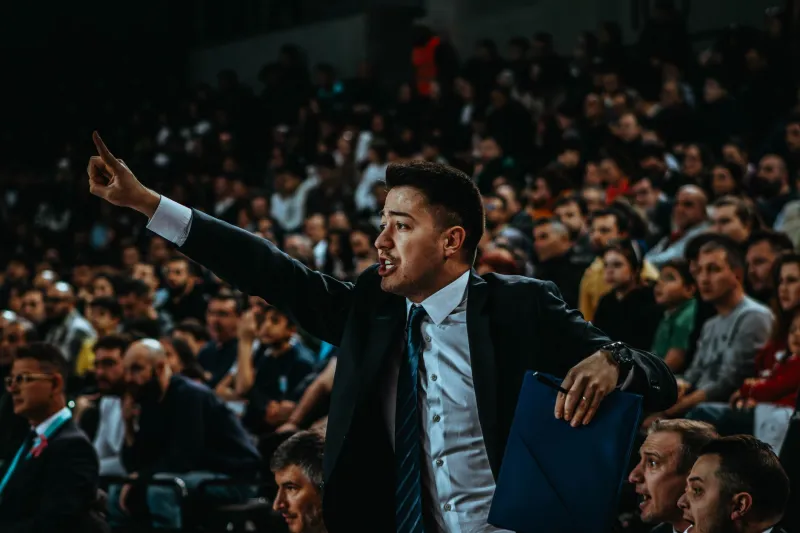
Imagine paying for a ticket to a professional basketball game, finding your seat, and then watching five grown men pass the ball back and forth near halfcourt for six straight minutes. Nobody driving to the basket. Nobody shooting. Just controlled, deliberate, maddeningly patient stalling.
That wasn't a nightmare. That was Tuesday night in the early NBA.
A Sport That Hadn't Figured Itself Out Yet
Professional basketball in the late 1940s and early 1950s was still searching for its identity. The rules were loose enough that a team with a lead could — and regularly did — simply stop trying to score. If you were up by eight points in the third quarter, the smart play was to hold the ball, force the other team to foul you, and bleed the clock dry. No rule said you had to attempt a shot. Ever.
Coaches weren't being lazy or cowardly. They were being rational. Protecting a lead by freezing the ball was a legitimate, effective tactic. The problem was that it made basketball almost unwatchable.
Final scores from that era tell the story. Games routinely ended in the 60s. Some finished in the 50s. In November 1950, the Fort Wayne Pistons beat the Minneapolis Lakers 19–18 — a score that wouldn't look out of place in a low-scoring college football game. Fort Wayne held the ball for long stretches on purpose, the Lakers couldn't stop them, and the crowd sat there watching professional athletes essentially play keep-away.
 Photo: Minneapolis Lakers, via logos-world.net
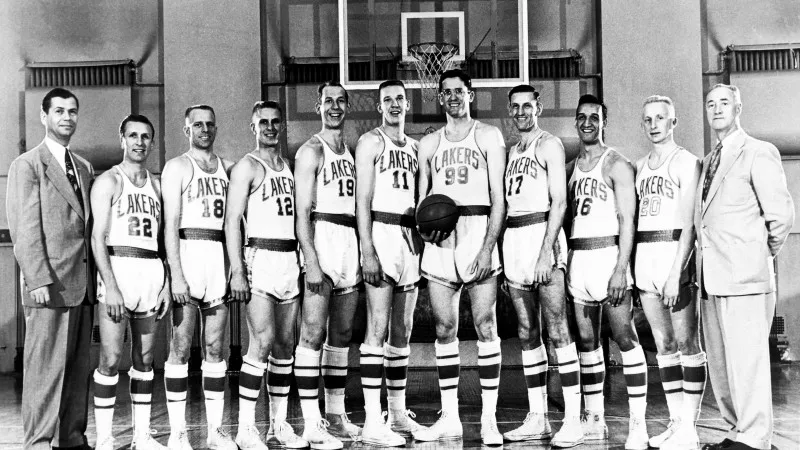 Photo: Fort Wayne Pistons, via img.tokyvideo.com
People left. A lot of people left. And a lot more stopped buying tickets in the first place.
The League Was in Real Trouble
By the early 1950s, the NBA wasn't exactly a thriving institution. Attendance was soft. Fan interest was fragile. The stall tactic had become so prevalent that some games were essentially unwatchable from tipoff. Teams with leads would go into freeze mode early — sometimes before halftime — and the spectacle would evaporate entirely.
The league needed something to change, and it needed it fast. What it got was Danny Biasone.
Biasone owned the Syracuse Nationals, and he had been watching the slow-motion disaster of stall-ball with growing frustration. His solution was elegant in its simplicity. He divided the number of seconds in a game by the average number of shots he believed should be taken — arriving, after some tinkering, at 24 seconds. That would be the limit. Once a team gained possession, they had 24 seconds to attempt a shot or surrender the ball.
 Photo: Syracuse Nationals, via assets.rebelmouse.io
The 24-second shot clock was adopted before the 1954–55 season. It wasn't a tweak. It was a defibrillator.
What Happened Next Was Immediate
The numbers shifted almost overnight. Scoring averages jumped dramatically. Teams that had been grinding out 60-point games were suddenly pushing past 90. Players who had spent entire possessions standing around waiting for something to happen were now sprinting, cutting, and improvising under constant pressure.
The Fort Wayne Pistons — the same franchise that had beaten the Lakers 19–18 just a few years earlier — averaged over 74 points per game in that first shot-clock season. The league average climbed by nearly 14 points per game in a single year. That's not a gradual evolution. That's a sport being reinvented in real time.
Fans noticed. Arenas got louder. The pace that basketball had always promised but rarely delivered was finally, consistently there.
The Game We Know Was Never Guaranteed
It's easy to take modern NBA basketball for granted — the pace, the athleticism, the triple-digit scores that feel almost routine. A 108–104 final barely registers as notable now. But that world didn't arrive naturally. It was engineered, deliberately, because the alternative was a sport that was quietly dying in front of sparse crowds who'd seen enough ball-hogging to last a lifetime.
Today's NBA is a relentless, breathless operation. Teams routinely launch 35 or more three-point attempts per game. Players track their usage rates and shot quality through sophisticated analytics. Possessions are precious, and burning one with a bad shot is a fireable offense in some organizations.
The idea that a team might simply choose not to shoot — not because they were out of options, but because standing still was a winning strategy — feels like a description of a completely different sport. Because in a very real sense, it was.
One Rule, One Sport
There's a version of history where nobody invents the shot clock, or where the league decides the stall game is just part of basketball's character and moves on. In that version, it's hard to imagine the NBA becoming what it became — a global entertainment product worth tens of billions of dollars, with players who are among the most recognizable athletes on the planet.
Instead, a franchise owner in Syracuse did some arithmetic on a napkin, convinced the right people, and changed everything.
Were we ever really in a world where professional basketball's biggest strategic innovation was doing absolutely nothing? We were. And it almost ended the whole thing before it had a chance to begin.