You're Hurt. Good Luck Getting Home: The Era When Injured Athletes Were Basically on Their Own
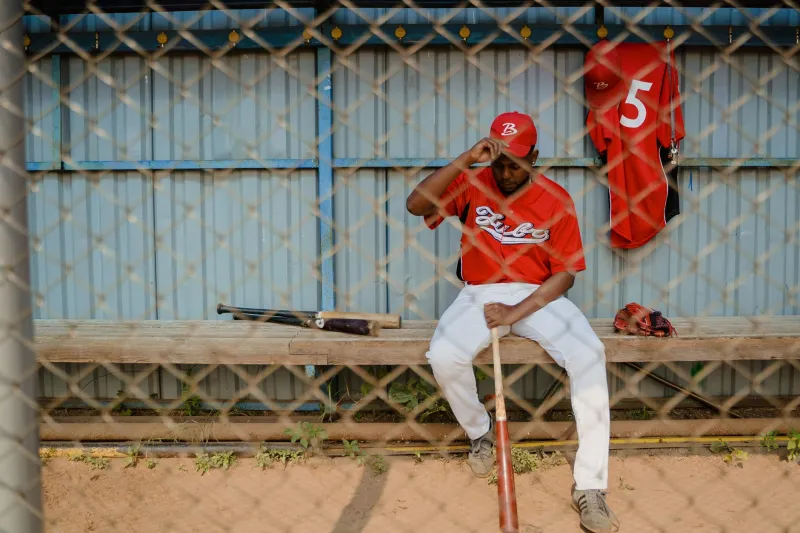
You're Hurt. Good Luck Getting Home: The Era When Injured Athletes Were Basically on Their Own
Picture this: You're a professional baseball player in 1937. Your team is on a road trip through the Midwest. Somewhere in the third inning, you slide awkwardly into second base and feel something give in your knee. The trainer — if the team has one traveling with them — wraps it tight, tells you it doesn't look good, and that's more or less the end of the professional support structure.
You're getting home on your own. You're figuring out the medical care on your own. And whether the team wants you back when you get there? That's a conversation for another day.
The Traveling Party Was Lean
For much of professional sports history in America, road trips were logistically bare-bones operations. Teams traveled by train, shared sleeping cars, and arrived in cities with enough time to play and leave. The idea of a traveling medical staff — a physician, a physical therapist, a certified athletic trainer — was largely a luxury that most franchises didn't consider worth the expense.
Many teams had a single trainer, and that person's qualifications varied enormously. Some were genuinely skilled. Others were essentially team employees who had learned a few wrapping techniques and could apply heat or ice with reasonable confidence. What they almost universally were not was equipped to manage serious injuries far from home.
When a player went down badly on the road, the immediate practical question wasn't about diagnosis or treatment. It was about logistics. How does this person get home? Who pays for it? What happens next?
The Financial Reality Was Brutal
Early professional sports contracts were not the sprawling legal documents they are today. Many didn't include provisions for injury-related travel expenses, medical coverage, or rehabilitation support. A player who broke his leg in Cincinnati might be expected to purchase his own train ticket back to the home city, arrange his own medical care, and present himself to the team when he was healthy enough to play again.
Some teams helped informally — covering a train fare here, pointing a player toward a local doctor there. But there was no systematic obligation. The franchise's financial commitment to an injured player was often limited to whatever was spelled out in a contract that had been negotiated with little to no legal representation on the player's side.
And those contracts frequently included clauses that allowed teams to release injured players without much financial consequence. The incentive structure was clear: an injured player was a liability, not a responsibility.
Rehabilitation Was a Private Matter
Assuming an injured player made it home, the rehabilitation process was almost entirely self-directed. Team facilities were modest by modern standards, and dedicated rehabilitation equipment was largely nonexistent. Players rested, tried to stay in reasonable shape, visited doctors they found on their own, and showed up when they felt ready.
The concept of a structured, team-supervised recovery program — with daily check-ins, progressive loading protocols, and clearance criteria based on functional testing — simply didn't exist. You were hurt. You got better. You came back. The process in between was your problem.
This created enormous variation in outcomes. Players who happened to know good doctors, or who lived near decent medical facilities, had meaningfully better chances of returning to full function. Those who didn't were often left guessing, relying on the same folk remedies and instinctive approaches that had governed sports medicine for generations.
The Psychological Weight Nobody Talked About
Beyond the physical reality, there was a psychological dimension to this that rarely gets discussed. An athlete injured on the road in 1940 didn't just face pain and uncertainty about recovery. He faced genuine economic precarity. Without a guaranteed contract, without a structured rehabilitation pathway, without any real assurance that the team would hold his roster spot, injury carried an existential threat that modern athletes are almost entirely insulated from.
The pressure to return quickly — before you were medically ready, before the knee had healed properly, before the shoulder was actually stable — wasn't just cultural. It was rational. Staying injured too long meant someone else took your spot. And without a union with meaningful bargaining power or a contract with guaranteed money, that was a real and immediate danger.
Playing hurt wasn't just toughness. It was often the only financially sensible option available.
The Distance Between Then and Now
Contemporary professional sports franchises operate with a level of athlete support that would be unrecognizable to players from even 50 years ago. Charter flights carry injured players home in comfort, often with a team physician and certified athletic trainer on board. Specialist surgeons are on call. Rehabilitation is conducted in purpose-built facilities with equipment that didn't exist a generation ago. Contracts guarantee millions of dollars regardless of whether a player can take the field.
NFL teams now have staffs of a dozen or more medical personnel. NBA franchises employ nutritionists, sleep specialists, and biomechanics experts alongside traditional trainers and physicians. The modern professional athlete is, in terms of institutional support, one of the most carefully maintained human beings on the planet.
The person who broke his leg in Cincinnati in 1937 and bought his own train ticket home was operating in a completely different world — one where the sport needed his body but felt no particular obligation to protect it.
The Bodies Behind the Business
Sports has always been a business built on physical labor. What changed, slowly and unevenly, was the degree to which that business acknowledged any responsibility toward the people doing the work.
The shift didn't happen because of generosity. It happened through collective bargaining, legal pressure, public scrutiny, and the gradual recognition that healthy athletes were more valuable than injured ones. The care is real now. But it took a very long time to arrive, and a lot of players paid the price for the wait.