Friday Night, 10 PM, and the DJ Decided What Came Next: The Era Before You Chose Everything
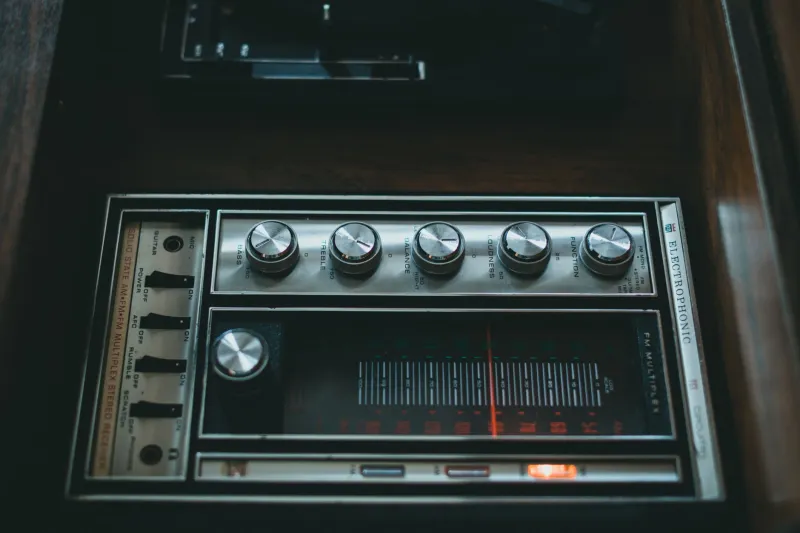
Picture this: it's a Friday night somewhere in middle America, 1978. You've got the radio on. A DJ whose name you know — whose voice you'd recognize anywhere — is talking between songs, building toward something. He plays a record you've never heard. You can't skip it. You can't look up who it is. You just have to listen. And something about that helplessness, that total surrender to someone else's taste, turns out to be one of the most powerful ways music has ever moved from one person to another.
That experience is effectively gone. And the thing that replaced it is extraordinary and a little hollow at the same time.
The DJ as Cultural Authority
American radio's golden era for music discovery ran roughly from the late 1950s through the 1990s. During those decades, a relatively small number of DJs — at local stations, at regional powerhouses, at the handful of stations with national reach — exercised enormous influence over what the public heard. They weren't just button-pushers. The best of them were curators, advocates, taste-makers.
Figures like Alan Freed in the 1950s didn't just play rock and roll — they created the context in which white America encountered it. Wolfman Jack, broadcasting from a border blaster station powerful enough to reach half the continent, introduced sounds to teenagers in living rooms who had no other access to them. Local DJs in cities across the country developed loyal followings built on trust: these were people who had heard everything and were telling you what mattered.
Breaking a new artist meant something in that world. A DJ who believed in a record could spin it repeatedly, build anticipation, read the phones, talk about it between sets. There was no data dashboard showing streaming numbers. It was judgment and instinct and relationship — the DJ's relationship with their audience, and the audience's trust that the DJ was bringing them something worth their time.
Scarcity Did Something Strange and Valuable
Here's the counterintuitive thing about having fewer choices: it created a shared culture that abundance has made nearly impossible to replicate.
When a song was on the radio, everyone was hearing it. Not everyone in the country — but everyone in your city, your town, your car-pool lane. The song your friend was humming was the same song you'd been humming because you'd both caught it on the same station. Music was a common reference point in a way it hasn't been since the early streaming era.
The watercooler conversation about last night's song. The scramble to call the station and find out who that was. The particular excitement of hearing a favorite track come on unexpectedly, because you couldn't just queue it up whenever you felt like it. Scarcity created stakes. Stakes created memory. The songs you had to wait for — the ones you couldn't control — often hit harder than the ones you could summon instantly.
There's a reason people remember exactly where they were when they first heard certain songs. Part of that is the music itself. Part of it is that the discovery was an event, not a menu option.
The Playlist That Knows You Too Well
Spotify has over 100 million tracks. Apple Music isn't far behind. YouTube contains more music than any human being could listen to in several lifetimes. The streaming era solved the access problem so completely that the problem itself is now almost unimaginable. A teenager in rural Montana today has better access to global music than a record executive in New York had in 1985. That's a genuine miracle.
But the discovery mechanisms built to navigate that abundance have created their own distortions. Algorithmic recommendations work by finding patterns in your behavior and serving you more of what those patterns predict you'll like. The system is good at this — often startlingly good. But it has a structural bias toward the familiar. It optimizes for satisfaction, not surprise. It gives you more of what you already are, rather than something that might change you.
The friction that used to exist in music discovery — not knowing who the artist was, having to sit through songs you didn't choose, being at the mercy of someone else's selections — was also the mechanism by which you encountered things outside your existing taste. Algorithms don't really do that. They're too polite.
There's also the question of shared experience. Streaming is radically individualized. Your playlist isn't my playlist. The song that defined your summer almost certainly didn't define mine. The common cultural reference points that radio provided — imperfect and exclusionary as radio programming often was — have fragmented into billions of personal feeds that rarely intersect.
The Smaller Fires Still Burning
It would be wrong to say the DJ-as-curator is completely dead. College radio stations still operate with a mission that's closer to the old model than commercial radio ever was. Podcast hosts who build music-adjacent shows around taste and advocacy have found real audiences. Some Spotify playlist curators have developed genuine followings. NPR's music coverage still introduces listeners to artists they wouldn't have found on their own.
These are real. But they're opt-in experiences for people who go looking for them, which is a different thing from being a teenager with the radio on in your bedroom at 10 PM, unable to change what comes next, discovering something that rewires you a little.
Were We Ever Here
The radio era wasn't democratic. Payola was real. Gatekeeping excluded artists and genres that deserved better. The power a handful of programmers held over what an entire generation heard was never entirely benign. Streaming fixed genuine injustices alongside the inconveniences.
But the DJ who decided what came next also built something that infinite choice hasn't managed to replace: a moment when music was something that happened to you, not something you curated for yourself. The loss of that — the loss of genuine surprise, of shared discovery, of being handed something you didn't know you needed — is quiet and strange and worth sitting with for a minute before you skip to the next track.