The Man Next to You Was the Instant Replay: How Fans Once Made Sense of What Just Happened
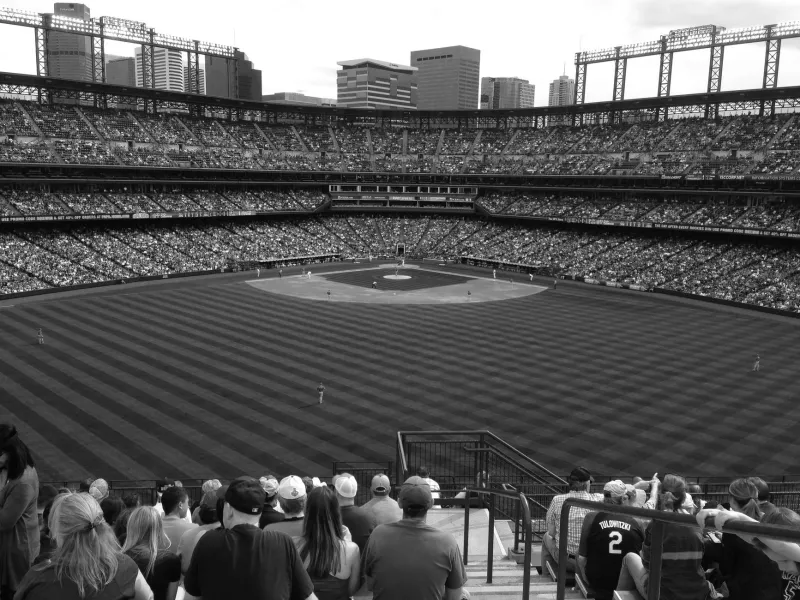
Something happened on the field. You felt it before you saw it — a sudden shift in the crowd's energy, a collective intake of breath, the guy in row twelve rising to his feet while you were still looking at your program. By the time your eyes found the right spot on the field, it was already over.
So you turned to the stranger on your left and asked: What just happened?
For most of sports history, that question — and the human chain of answers it set off — was the only replay available.
The Crowd as Collective Camera
This is something worth sitting with for a moment, because it describes an experience so foreign to modern sports attendance that it almost sounds fictional. Before stadium video boards. Before in-game broadcasts piped into arena speakers. Before the smartphone in your pocket could pull up a clip before the players had even untangled themselves — there was just the crowd.
And the crowd, it turns out, was a remarkably sophisticated information system.
A baseball fan in a 1940s ballpark didn't need a replay to understand that something extraordinary had just occurred. The sound told them. The ripple of bodies rising in sequence through the upper deck told them. The vendor who stopped mid-pitch and turned toward the field told them. Information moved through a stadium the way it moves through any densely connected human network — imperfectly, but fast, and with a kind of emotional fidelity that no camera angle has ever quite replicated.
What the crowd couldn't give you was precision. It could tell you that something significant had happened. It couldn't always tell you exactly what.
Reading the Room, Literally
Fans developed real skills around this. Experienced ballpark regulars learned to read the geometry of a crowd reaction — which section rose first, which direction heads turned, how quickly the noise spread — to reconstruct a play they hadn't seen clearly. It was almost like reading weather patterns. The crowd's behavior was data, and you learned to interpret it.
The guy next to you who had a slightly better sightline became genuinely valuable. People cultivated their stadium seating spots partly for the angles they provided, the way a photographer scouts locations. Being able to see the left field corner clearly, or having an unobstructed view of the backfield, wasn't just a preference — it was a practical advantage in the shared project of understanding what was happening on the field.
Newspaper diagrams did some of the work that replays do now. The morning after a significant game, sports pages would run illustrated breakdowns of key plays — dotted lines showing a receiver's route, an arrow indicating where the ball crossed the plate. These diagrams were genuinely studied. They were the delayed, printed version of what we now consume in the first thirty seconds after a play ends.
The Conversation That Used to Follow Every Play
What this created, almost accidentally, was a culture of active interpretation. Watching a live sporting event wasn't a passive act of consumption — it was a collaborative exercise in collective sense-making. The conversation between strangers in the stands wasn't just social filler. It was functional. It was how understanding got built and shared.
Did he catch it before he hit the wall? Was that a flag? I thought I saw a flag. That ball was outside. I don't care what the ump says, I had a clear view.
These conversations happened constantly, and they mattered. They were the mechanism through which a stadium full of people arrived at a shared account of what had just occurred. Sometimes that account was wrong — eyewitness testimony from sixty rows back is famously unreliable — but it was theirs, assembled in real time from human observation and human argument.
What Certainty Replaced
Today, that conversation has been largely replaced by the video board. A significant play happens, and within seconds every eye in the stadium turns upward to watch it again, correctly, from the best available angle, often in slow motion. Disputed calls get resolved — or at least re-examined — before the crowd has finished reacting to the original play.
This is, by almost any objective measure, better. You know what happened. The ambiguity is gone.
But ambiguity, it turns out, was doing a lot of work.
The version of events that a crowd constructed together — imprecise, debated, sometimes flat-out wrong — was a shared creation. It belonged to everyone who had been there and participated in building it. The replay version belongs to the broadcast. You're a viewer of the correct account, not a co-author of the remembered one.
There's a reason people who attended legendary sporting events before the replay era describe them differently than people who watched the same moments on television. The people in the stands don't just remember what happened. They remember figuring out what happened, together, in real time, with strangers.
The Irreplaceable Thing
Instant replay is one of the genuinely great inventions in the history of sports consumption. Nobody is seriously arguing for its removal. But it's worth acknowledging what it quietly ended: the era when understanding a live sports moment was a communal, human act rather than a technological confirmation.
The crowd used to be the camera. The stranger next to you used to be the analyst. The collective gasp was the alert.
Were we ever really here in that way — present, uncertain, turning to each other for answers — before certainty arrived and made the question unnecessary?