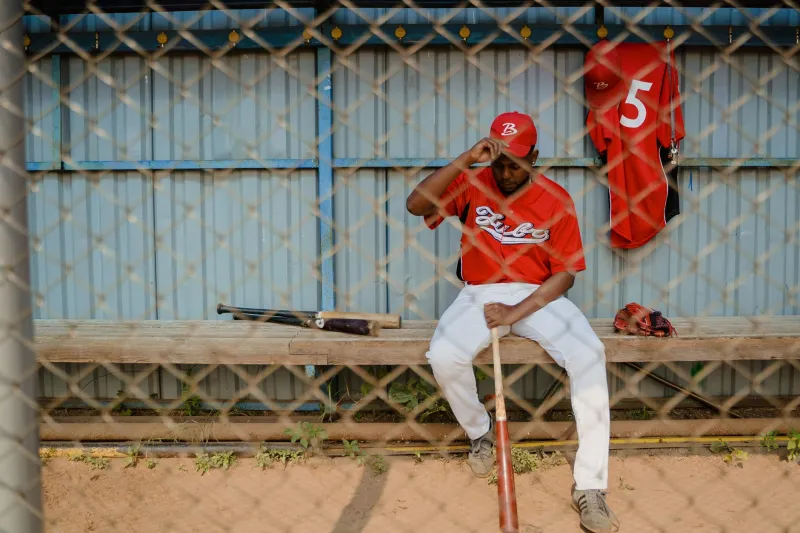
The Same Guy Who Fixed Your Knee Fixed the Shortstop's: When Pro Teams Shared a Doctor With the Whole Town
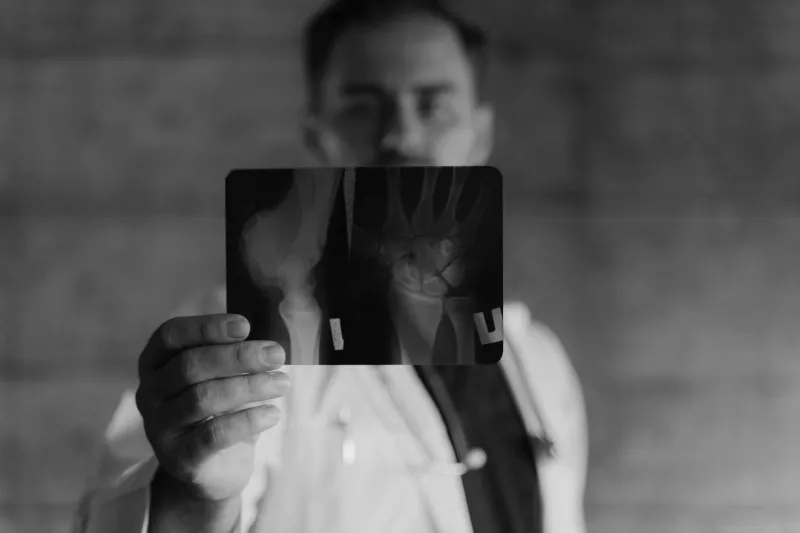
The Same Guy Who Fixed Your Knee Fixed the Shortstop's: When Pro Teams Shared a Doctor With the Whole Town
Picture a Tuesday morning in 1954. A star center fielder limps into a modest brick office building on the east side of town. He sits in a waiting room alongside a plumber with a bad shoulder and a schoolteacher nursing a sinus infection. The doctor — a general practitioner who happens to also hold the title of "team physician" for the local ball club — squeezes him in between appointments.
That was pro sports medicine for most of the twentieth century. Not a state-of-the-art facility with imaging suites, orthopedic specialists, and recovery pools. Just one overworked doctor doing his best with what he had.
One Doctor, Two Worlds
For the better part of American professional sports history, teams didn't employ full-time medical staffs. They retained a local physician — often a well-regarded community doctor who happened to love the game — on a part-time or consultancy basis. The arrangement was informal by today's standards, shaped as much by personal relationships and civic pride as by any systematic thinking about athlete health.
These doctors weren't frauds or second-raters. Many were genuinely talented physicians. But their expertise was broad rather than deep. A general practitioner in 1948 wasn't trained in sports-specific biomechanics, load management, or the long-term consequences of repetitive joint stress. He was trained to keep people functional — which, in a sports context, often translated to: get the player back on the field as fast as possible.
The incentive structure didn't help. Team doctors were often paid modestly, sometimes in season tickets or a small annual retainer. Their primary income came from private practice. The franchise wasn't their only client; it was more like a side arrangement with a certain amount of local prestige attached.
Diagnosis by Intuition
Without MRI machines, without ultrasound, without the diagnostic imaging that today's team physicians treat as basic infrastructure, the team doctor of the mid-century era was working largely from feel — literally. He'd press on the joint, ask the player to move it a certain way, watch the wince, and make a call.
Sometimes that was enough. Experienced hands can tell a lot. But sometimes it wasn't nearly enough, and the consequences were severe. Ligament tears got misread as sprains. Stress fractures were dismissed as soreness. Concussions — barely understood as a category of injury at all — were waved off with a pat on the back and a "you'll be fine by Thursday."
Delayed diagnoses weren't the exception. They were routine. A player might spend weeks "playing through" an injury that, had it been properly identified early, could have been treated and healed in a fraction of the time. Careers shortened not because of the injury itself, but because the injury was mismanaged from the first appointment.
And because that first appointment often happened in a general practice waiting room between a plumber and a schoolteacher, there wasn't a lot of time for nuance.
The Resourceful Workaround
To be fair to those doctors, they occasionally produced solutions that were surprisingly clever given their constraints. Without access to sophisticated tools, they developed strong observational instincts. Some became early advocates for rest — genuinely radical advice in an era when toughness was the dominant athletic philosophy. Others built informal networks, calling up a specialist colleague when something looked beyond their wheelhouse.
There's also something worth noting about the relationship between those doctors and the players. It was personal in a way that modern franchise medicine sometimes isn't. The team doctor might have delivered a player's children, treated his wife's flu, known his family for years. That intimacy created trust — and occasionally, it created pressure. A player might push through pain he would have reported to a stranger, not wanting to disappoint someone who felt more like a family friend than a medical professional.
The line between "the doctor says I'm fine" and "the doctor didn't want to be the one to bench me" was blurry in ways that nobody talked about openly.
What Changed — and When
The shift toward dedicated sports medicine didn't happen overnight. It accelerated through the 1970s and 1980s as player salaries rose dramatically and franchises began treating athletes as significant financial assets worth protecting. When a shortstop's contract is worth $400,000, the cost of a full-time orthopedic specialist starts looking like a reasonable investment.
The emergence of sports medicine as a formal discipline — complete with specialized training programs, certifications, and research — gave teams a reason and a framework to build proper medical departments. By the 1990s, major franchises in all four major American sports were assembling multi-person medical staffs. Today, a top NFL team might employ a head team physician, multiple orthopedic surgeons, a cardiologist on call, athletic trainers, physical therapists, sports psychologists, and nutritionists — all working under one roof, often in a facility that rivals a small hospital.
Were We Ever Here?
The contrast is almost hard to process. The same era that produced some of the most celebrated athletes in American sports history — players whose names still echo across decades — also produced a medical infrastructure that would make any modern sports scientist wince.
Those players weren't just tougher. They were operating in a system that gave them almost no choice but to be. The doctor who saw them between civilian appointments wasn't negligent; he was working within a structure that treated athlete health as secondary to athlete availability.
We look back at those grainy photographs — the ice pack, the tape job, the grimace on the walk back to the dugout — and we see grit. What we're also seeing, if we look honestly, is a system that didn't value the bodies it depended on nearly as much as it should have.