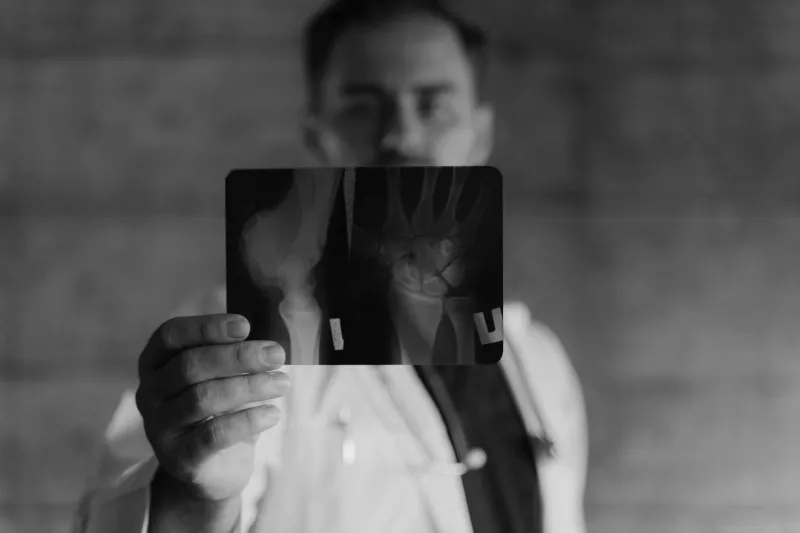
When Teammates Were the Team Doctor: Baseball's DIY Medical Era
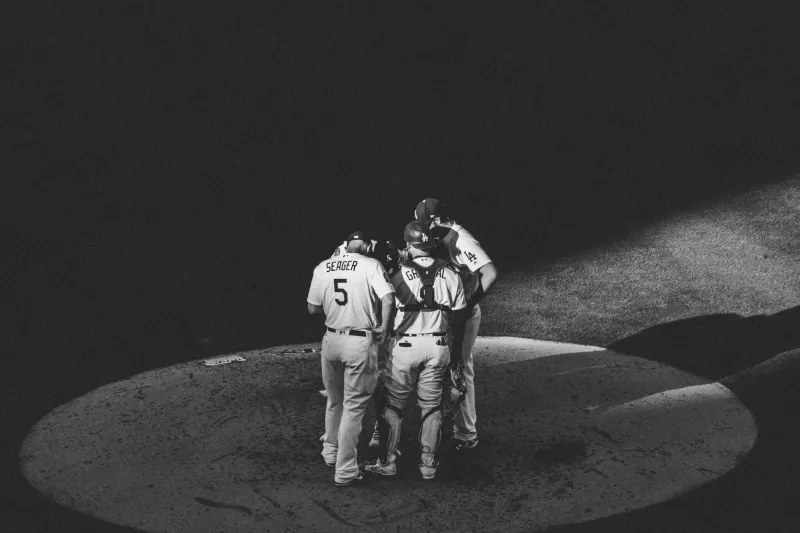
The Clubhouse Clinic
Picture this: It's 1952, and Chicago Cubs shortstop Roy Smalley slides hard into second base. His ankle twists at an unnatural angle, sending him sprawling in the dirt. As he limps off the field, wincing with every step, there's no team doctor waiting in the dugout. No X-ray machine humming in the medical facility. Instead, Smalley gets the expert medical opinion of his teammate, who takes one look and declares, "Just a sprain, kid. Walk it off."
 Photo: Roy Smalley, via i.ytimg.com
For the next three weeks, Smalley plays through what turns out to be a fractured ankle bone. His career batting average never recovers.
This wasn't an isolated incident. It was just Tuesday in professional baseball.
When Players Played Doctor
For decades, Major League Baseball operated with a medical philosophy that would make modern sports physicians faint. Team doctors weren't just rare—they were practically nonexistent. Most clubs employed a single trainer, often someone whose medical credentials amounted to "played high school football" and "good with tape."
Players diagnosed each other's injuries using a combination of folk wisdom, wishful thinking, and whatever remedies their grandmothers swore by. A dislocated finger? Pop it back in place and keep swinging. Persistent back pain? Rub some liniment on it and take batting practice. Recurring headaches after taking a fastball to the helmet? Sleep it off.
The Boston Red Sox of the 1940s had a trainer whose primary qualification was that he'd once worked as a masseur at a local hotel. His medical kit consisted of aspirin, adhesive tape, and a bottle of rubbing alcohol. When Ted Williams complained of elbow pain during the 1946 season, the trainer's diagnosis was "tennis elbow" and his prescription was "stop playing tennis." Williams had never picked up a tennis racket in his life.
 Photo: Ted Williams, via statics.ruadoll.com
The Price of Playing Through Pain
The consequences of this medical Stone Age were devastating, though nobody kept careful records of the carnage. Players routinely competed with broken bones, torn ligaments, and concussions that would sideline modern athletes for months. They had no choice—missing games meant losing pay, and most players couldn't afford to sit out even minor injuries.
Pitcher Dizzy Dean famously broke his toe during the 1937 All-Star Game. Without proper medical evaluation, he was told to keep pitching. Compensating for the injury altered his throwing motion, leading to arm problems that effectively ended his Hall of Fame career at age 27. A simple X-ray and a few weeks of rest might have saved one of baseball's greatest talents.
 Photo: Dizzy Dean, via 4kwallpapers.com
Catchers bore the brunt of this medical negligence. They crouched behind home plate wearing equipment that would be illegal in today's Little League, absorbing foul tips and collisions with nothing but leather padding and sheer stubbornness. Many developed chronic knee and back problems that plagued them for life, conditions that modern orthopedics could have prevented or treated effectively.
The Miracle Cures That Weren't
Without real medical knowledge, baseball developed its own mythology around injury treatment. Players swore by remedies that ranged from useless to downright dangerous. Hot baths in Epsom salts were considered a cure-all for muscle injuries. Cocaine was legally used as a local anesthetic well into the 1920s. Some trainers advocated for "bleeding" injured players to release bad humors—a practice abandoned by actual medicine centuries earlier.
The St. Louis Cardinals of the 1930s had a trainer who insisted that all injuries stemmed from "blocked energy flow." His treatment protocol involved having players stand on their heads for ten minutes while he chanted. Amazingly, some players reported feeling better afterward, though this likely had more to do with the placebo effect than any actual healing.
When Everything Changed
The transformation began slowly in the 1960s as teams started hiring actual physicians rather than glorified equipment managers. The Los Angeles Dodgers were pioneers, bringing in Dr. Robert Kerlan, who introduced radical concepts like "accurate diagnosis" and "evidence-based treatment."
By the 1980s, most teams had medical staffs that included orthopedic surgeons, physical therapists, and sports medicine specialists. Today's players have access to MRI machines, ultrasound therapy, and surgical techniques that can repair injuries once considered career-ending.
The Modern Medical Marvel
Walk into any MLB clubhouse today and you'll find a medical facility that would make many hospitals jealous. Teams employ sports medicine doctors, orthopedic surgeons, physical therapists, massage therapists, and nutritionists. Players undergo comprehensive physicals that include blood work, cardiac screening, and biomechanical analysis.
When a player gets injured now, he's immediately evaluated by medical professionals using state-of-the-art diagnostic equipment. Treatment plans are based on peer-reviewed research, not hunches from teammates who once played amateur football.
The contrast is staggering. Players who once competed with broken bones now sit out games for minor muscle strains, not because they're softer, but because teams understand the long-term costs of playing through injuries.
The Human Cost of Progress
Looking back, it's remarkable that baseball survived its medical dark ages at all. How many Hall of Fame careers were cut short by preventable injuries? How many players suffered in silence, their bodies breaking down from conditions that modern medicine treats routinely?
We'll never know the full extent of the damage, but we can appreciate how far we've come. The next time you see a player pulled from a game for "precautionary reasons," remember the era when precaution meant hoping your teammates knew the difference between a sprain and a fracture.
Baseball's medical evolution represents more than just better healthcare—it's a fundamental shift in how we value human potential and recognize that athletic talent deserves protection, not exploitation.